
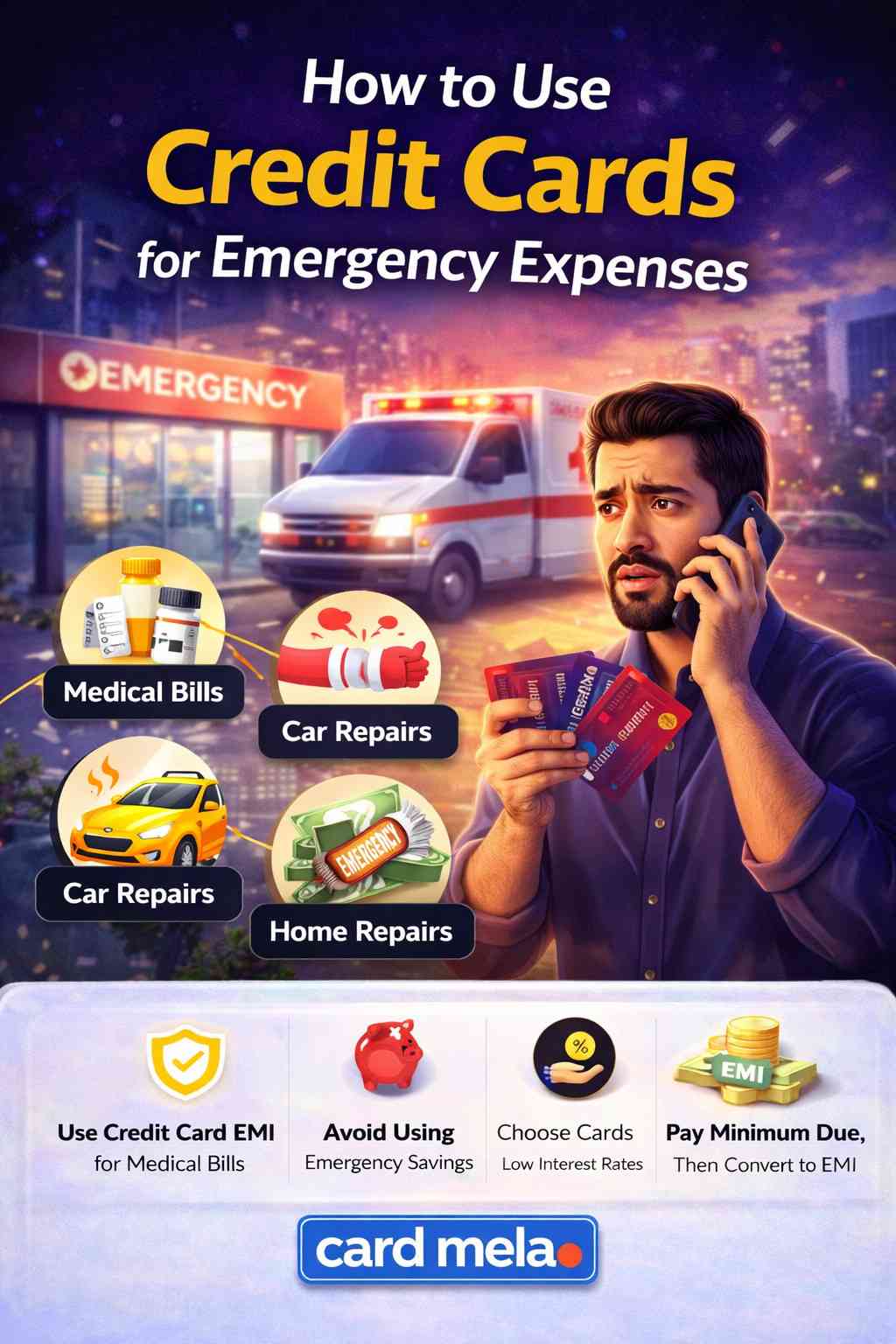
How to Use Credit Cards for Emergency Expenses
Table of Contents
How to Use Credit Cards for Emergency Expenses (2026): Smart Strategies to Stay Financially Secure
Introduction
In 2026, financial emergencies have become more unpredictable than ever. Whether it is a sudden medical expense, urgent travel, or an unexpected repair, the need for immediate funds can arise at any time. While maintaining an emergency fund is always recommended, many individuals still face situations where liquidity is limited. In such cases, credit cards act as a powerful financial safety net, providing instant access to funds without the delays associated with traditional borrowing methods.
Leading financial institutions such as HDFC Bank, ICICI Bank, Axis Bank, and State Bank of India have designed credit card systems that not only offer quick access to credit but also include features like EMI conversion, fraud protection, and reward programs. These features make credit cards highly effective during emergencies when both speed and flexibility are essential.
However, the real value of a credit card in emergencies depends on how it is used. Without proper planning, it can lead to unnecessary debt and financial stress. On the other hand, when used strategically, it can help manage urgent expenses smoothly while maintaining financial stability. This guide focuses on helping you understand how to use credit cards wisely during emergencies and how to integrate them into a broader financial strategy.
Explanation: How Credit Cards Help in Emergencies
Credit cards function as a short-term financial cushion by providing immediate access to a pre-approved credit limit. Unlike loans, there is no lengthy approval process, making them ideal for urgent situations. Users can make payments instantly for medical expenses, travel bookings, or essential purchases.
One of the most important features is the interest-free period. If the outstanding amount is repaid within this period, users can effectively use the bank’s money without incurring any extra cost. This makes credit cards one of the most efficient tools for managing short-term emergencies.
Additionally, many credit cards offer EMI conversion options, allowing users to spread large expenses over several months. This reduces financial pressure and makes repayment more manageable.
Benefits of Using Credit Cards for Emergency Expenses
Using credit cards during emergencies offers several advantages that can help users maintain financial stability. One of the primary benefits is instant liquidity. In situations where time is critical, credit cards eliminate the need to arrange funds from multiple sources, providing immediate financial relief.
Another significant advantage is flexibility in repayment. Users can choose to pay the full amount within the interest-free period or convert it into EMIs for easier management. This flexibility ensures that emergency expenses do not disrupt overall financial planning.
Credit cards also provide an added layer of security. Transactions are protected with fraud detection systems, and users can dispute unauthorized charges. Compared to debit cards, credit cards offer better consumer protection.
In addition, users can earn cashback or reward points even on emergency spending. While this may not be the primary goal, it helps reduce the overall cost of the expense.
Uses of Credit Cards in Emergency Situations
Credit cards can be used in a wide range of emergency scenarios, making them a versatile financial tool. In medical emergencies, they can be used for hospital bills, pharmacy purchases, and diagnostic tests, ensuring immediate treatment without delays.
For urgent travel needs, such as last-minute flight bookings or hotel stays, credit cards provide quick payment options along with potential discounts. Platforms like MakeMyTrip and Goibibo often offer deals when payments are made using specific cards.
Credit cards are also useful for home-related emergencies, such as urgent repairs or appliance replacements. Instead of delaying essential fixes, users can address the issue immediately and manage payments later.
In case of temporary income disruptions, credit cards can help cover essential expenses like groceries, utilities, and fuel, ensuring continuity in daily life.
Best NEW Credit Cards for Emergency Use
HDFC Bank MoneyBack+ Credit Card
- Good for daily emergency spending
👉 Apply Now on CardMela
Axis Bank ACE Credit Card
- Strong cashback on bills
👉 Apply Now on CardMela
ICICI Bank Coral Credit Card
- Balanced benefits + easy usage
👉 Apply Now on CardMela
SBI PRIME Credit Card
- Higher limit for emergencies
👉 Apply Now on CardMela
IDFC FIRST Millennia Credit Card
- No annual fee + flexibility
👉 Apply Now on CardMela
Table: Emergency Spending vs Repayment Strategy
| Expense Type | Amount | Best Strategy | Benefit |
|---|---|---|---|
| Medical Bill | ₹50,000 | EMI Conversion | Manageable payments |
| Travel | ₹20,000 | Full Payment | No interest |
| Repairs | ₹15,000 | Partial Payment | Flexibility |
Table: Credit Card vs Personal Loan
| Feature | Credit Card | Personal Loan |
|---|---|---|
| Approval Time | Instant | Time-consuming |
| Flexibility | High | Moderate |
| Interest | Avoidable | Fixed |
| Usage | Flexible | Fixed purpose |
Tips
Using credit cards for emergency expenses requires a disciplined and well-thought-out approach. One of the most important tips is to treat your credit card as a backup resource rather than a primary source of funds. This means preserving your credit limit for genuine emergencies and avoiding unnecessary spending that could reduce your available balance when you need it the most.
Another critical strategy is to prioritize repayment planning before making any emergency transaction. Even though credit cards offer an interest-free period, users should have a clear plan to repay the amount within this timeframe. This ensures that the emergency does not turn into a long-term financial burden. For larger expenses, converting the amount into EMIs can provide manageable repayment options, but users should carefully evaluate the interest costs involved.
It is also essential to maintain a buffer in your credit limit. Keeping at least 30–40% of your credit limit unused ensures that you have sufficient funds available in case of unexpected situations. This simple habit can make a significant difference during critical moments.
Monitoring transactions in real time is another powerful practice. Enabling SMS and app notifications allows users to track every expense and detect any unusual activity immediately. This not only helps in managing spending but also enhances security.
Finally, users should regularly review their credit card features and benefits. Many cards offer emergency-related benefits such as insurance coverage, zero liability on fraud, and quick customer support. Being aware of these features can help users make better decisions during stressful situations.
Internal Linking
While managing emergency expenses, it is equally important to understand how to optimize your overall credit card usage. For example, you can explore detailed strategies in your CardMela guides like “How to Maximize Credit Card Rewards” to ensure that even emergency spending generates value.
Similarly, if you want to build long-term financial strength, reading “Financial Independence Using Credit Cards” can help you understand how to turn everyday expenses into savings opportunities. For users who rely on multiple cards, the guide on “How to Combine Multiple Credit Cards for Maximum Cashback” provides advanced strategies to maximize benefits.
Internal linking not only improves SEO performance but also helps users navigate related topics, creating a complete financial learning experience.
- Best Cashback Credit Cards
- How to Maximize Credit Card Rewards
- Financial Independence Using Credit Cards
External Linking
To ensure safe and informed usage of credit cards during emergencies, it is important to follow official guidelines and trusted platforms. Institutions like the Reserve Bank of India regularly provide updates on financial safety, fraud prevention, and responsible credit usage.
For emergency travel or urgent bookings, platforms like MakeMyTrip and Goibibo can be useful, especially when combined with credit card offers. These platforms often provide instant booking options along with discounts, making them ideal for time-sensitive situations.
Using reliable external sources not only enhances trust but also ensures that users are making informed financial decisions.
Conclusion
Financial emergencies are an unavoidable part of life, but how you handle them defines your financial stability. Credit cards, when used wisely, provide a reliable and efficient solution to manage urgent expenses without disrupting your overall financial plan. They offer speed, flexibility, and additional benefits that make them one of the most practical tools in critical situations.
However, the effectiveness of credit cards depends entirely on user behavior. Responsible usage, timely repayment, and strategic planning are essential to ensure that credit cards remain a support system rather than a source of financial stress. By combining smart habits with the right financial tools, users can navigate emergencies confidently and maintain control over their finances.
In the long run, building a balanced financial strategy that includes savings, insurance, and responsible credit usage creates a strong safety net. This not only helps in handling emergencies but also supports long-term financial growth.
FAQs
Q1. Are credit cards safe for emergencies?
Yes, if used responsibly and repaid on time.
Q2. Should I use EMI for emergency expenses?
Yes, for large amounts if full payment is not possible.
Q3. Is it better than a loan?
For short-term needs, yes.
Q4. How much limit should I keep free?
At least 30–40% unused.
Author Bio
A platform dedicated to helping users compare credit cards and make smarter financial decisions. He specializes in banking trends, AI in finance, and cashback strategies, providing practical insights to maximize savings and optimize spending in India.
Whether you’re looking for cashback, travel rewards, fuel savings, or lifetime free cards — CardMela helps you compare, analyze, and choose the credit card that fits your lifestyle perfectly. We partner with leading partners to bring you exclusive offers and detailed insights, so you can make smart financial decisions with confidence.
© 2025 CardMela.com. All rights reserved.
