
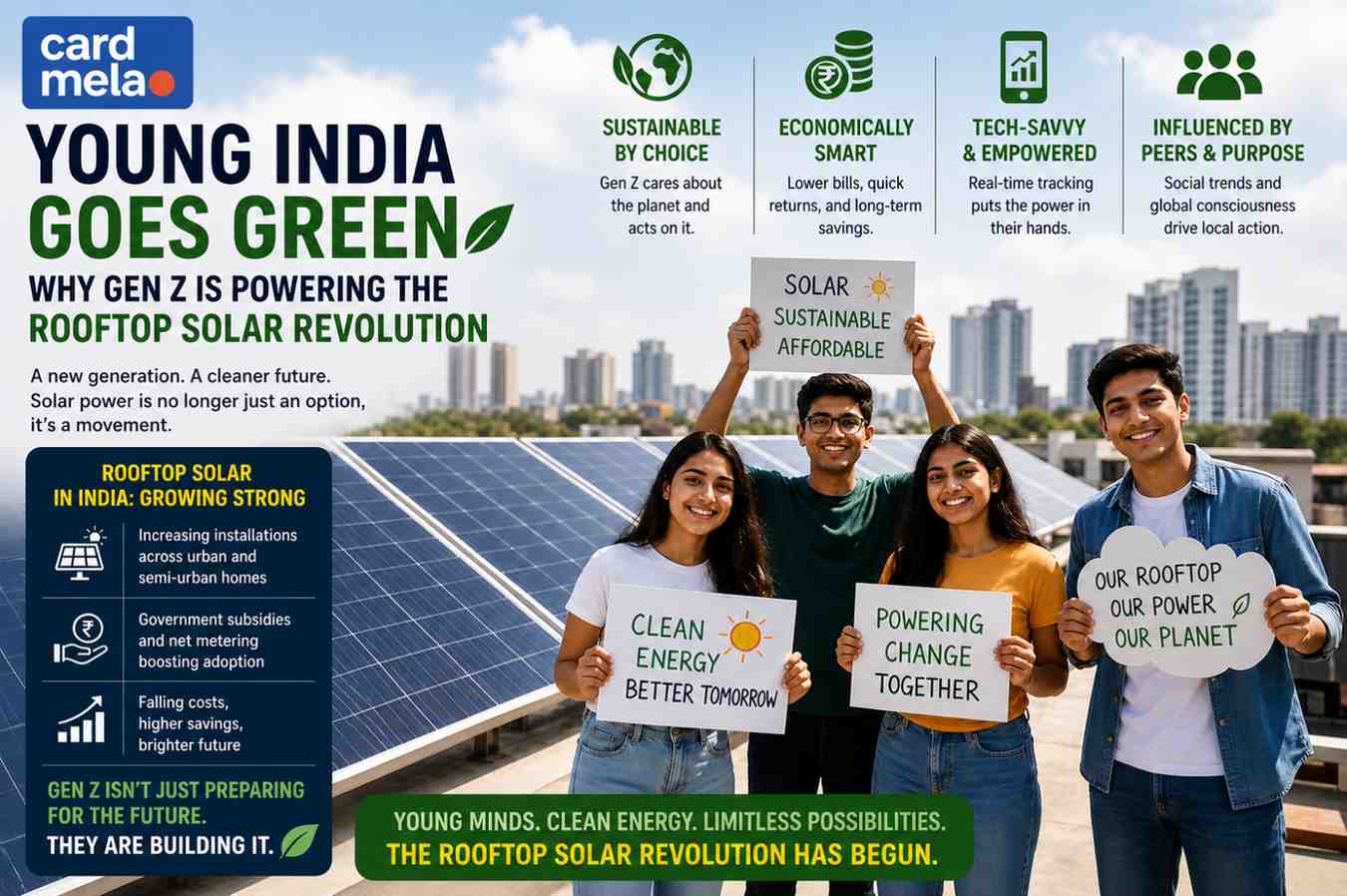
Young India Goes Green(2026 Guide)
Table of Contents
Young India Goes Green: Why Gen Z is Powering the Rooftop Solar Revolution
Introduction
India is witnessing a silent yet powerful transformation in its energy landscape. Rooftops that once remained unused are now becoming centers of clean energy production, driven largely by a new and influential force—Gen Z. This generation, born between the late 1990s and early 2010s, is not only tech-savvy but also deeply conscious about sustainability and environmental impact.
With increasing awareness around climate change, rising electricity costs, and strong government support, rooftop solar adoption is growing rapidly across urban and semi-urban India. Organizations like the Ministry of New and Renewable Energy India and policies backed by the Government of India are encouraging households to shift towards renewable energy. For Gen Z, solar energy is not just a cost-saving tool—it is a lifestyle choice and a responsibility.
Explanation
The rise of rooftop solar in India is driven by a combination of environmental awareness, economic benefits, and technological advancements. Gen Z consumers are more informed and proactive when it comes to making sustainable choices. They actively research government subsidies, compare installation costs, and evaluate long-term savings before making decisions.
Modern solar systems are designed to be user-friendly and efficient. With mobile apps and real-time monitoring, users can track energy production, consumption, and savings. This aligns perfectly with Gen Z’s preference for digital control and transparency. The ability to manage energy usage like a financial asset has made solar power even more attractive.
Additionally, the financial logic behind solar adoption is becoming stronger. With net metering policies and reduced installation costs, households can recover their investment within a few years and enjoy nearly free electricity thereafter.
Benefits
Rooftop solar offers a wide range of benefits that appeal strongly to Gen Z consumers. The most significant advantage is cost savings. By generating their own electricity, households can significantly reduce or even eliminate their monthly electricity bills. Over time, this leads to substantial financial savings.
Another major benefit is environmental impact. Solar energy is clean and renewable, helping reduce carbon emissions and dependence on fossil fuels. For a generation that prioritizes sustainability, this is a key motivating factor.
Solar installations also increase property value and provide long-term energy security. With rising electricity tariffs, having a solar system ensures predictable and stable energy costs. Additionally, government subsidies and incentives make solar installations more affordable, encouraging more households to adopt this technology.
Table: Rooftop Solar Cost vs Savings
| System Size | Approx Cost | Annual Savings | Payback Period |
|---|---|---|---|
| 3 kW | ₹1.5–2 lakh | ₹30,000–40,000 | 4–5 years |
| 5 kW | ₹2.5–3.5 lakh | ₹60,000–80,000 | 4–5 years |
| 10 kW | ₹5–7 lakh | ₹1.2–1.5 lakh | 4–6 years |
Table: Why Gen Z is Choosing Solar
| Factor | Reason |
|---|---|
| Sustainability | Climate awareness |
| Cost Savings | Lower electricity bills |
| Technology | App-based monitoring |
| Government Support | Subsidies & policies |
| Social Influence | Trend & awareness |
Table: Rooftop Solar Installation Checklist
| Step | Action | Importance |
|---|---|---|
| 1 | Check electricity bill | High |
| 2 | Decide system size | High |
| 3 | Choose installer | High |
| 4 | Apply for subsidy | Medium |
| 5 | Install system | High |
| 6 | Activate net metering | High |
Table: Solar Panel Efficiency Factors
| Factor | Impact on Performance |
|---|---|
| Sunlight availability | Higher generation |
| Panel angle | Better efficiency |
| Dust & dirt | Reduces output |
| Temperature | Affects performance |
| Maintenance | Improves lifespan |
Table: Financing Options for Solar Installation
| Option | Benefit | Best For |
|---|---|---|
| Full Payment | No interest cost | High budget users |
| Bank Loan | Easy EMI | Salaried users |
| Credit Card EMI | Rewards + flexibility | Smart spenders |
| Government Subsidy | Reduced cost | All users |
Table: Monthly Savings Estimate
| System Size | Monthly Bill Before | Monthly Bill After | Savings |
|---|---|---|---|
| 3 kW | ₹3,000 | ₹500 | ₹2,500 |
| 5 kW | ₹6,000 | ₹800 | ₹5,200 |
| 10 kW | ₹12,000 | ₹1,500 | ₹10,500 |
Table: Solar System Lifespan & ROI
| Component | Lifespan | ROI Impact |
|---|---|---|
| Solar Panels | 20–25 years | High |
| Inverter | 8–10 years | Medium |
| Wiring | 15 years | Low |
| Structure | 20 years | Medium |
Table: Gen Z vs Traditional Consumers
| Factor | Gen Z | Older Generation |
|---|---|---|
| Awareness | High | Medium |
| Tech usage | High | Low |
| Decision speed | Fast | Slow |
| Sustainability focus | Strong | Moderate |
Best Credit Cards to Finance Solar & Save Money
HDFC Bank Regalia Gold Credit Card
- High limit for big purchases like solar installation
👉 Apply Now on CardMela
Axis Bank Select Credit Card
- Cashback on large transactions
👉 Apply Now on CardMela
Amazon Pay ICICI Credit Card
- Cashback on equipment purchases
👉 Apply Now on CardMela
SBI Elite Credit Card
- Reward points on high-value spends
👉 Apply Now on CardMela
IDFC FIRST Wealth Credit Card
- No annual fee + rewards
👉 Apply Now on CardMela
Table: Solar vs Traditional Electricity
| Factor | Solar Energy | Traditional Electricity |
|---|---|---|
| Cost | One-time investment | Monthly bills |
| Sustainability | Eco-friendly | Polluting |
| Long-term savings | High | Low |
| Maintenance | Low | None |
Table: Solar System Uses
| Use Case | Benefit |
|---|---|
| Home electricity | Bill savings |
| Business usage | Cost reduction |
| Backup power | Energy security |
| EV charging | Future-ready |
Tips
When planning to install a rooftop solar system, it is important to begin with a clear understanding of your electricity consumption and future energy needs. Choosing the right system size ensures that you neither overspend nor underutilize the potential of solar energy. It is always advisable to work with certified and experienced installers who can guide you through system design, installation, and government subsidy processes.
Another important tip is to take full advantage of available government incentives and financing options. Many users reduce their upfront cost significantly by applying for subsidies offered under schemes supported by the Ministry of New and Renewable Energy India. Additionally, using smart payment methods such as EMI options or credit cards can help manage the financial burden while also earning cashback or rewards.
Maintenance plays a key role in ensuring long-term efficiency. Regular cleaning of solar panels and monitoring performance through mobile apps helps maintain optimal energy generation. Users should also stay updated with policy changes and net metering rules, as these directly impact savings and returns. Lastly, adopting an energy-efficient lifestyle—such as using LED appliances and managing peak usage—can further maximize the benefits of your solar investment.
Internal Linking
- How to Save Money Effectively
- Best Cashback Credit Cards in India
- Financial Independence Using Credit Cards
- How to Build Wealth with Small Income
External Linking
Conclusion
The rise of rooftop solar in India represents a powerful shift toward a cleaner and more sustainable future, driven largely by the awareness and proactive mindset of Gen Z. What was once considered a luxury or niche investment has now become a practical and financially rewarding solution for households across the country.
By combining environmental responsibility with smart financial planning, solar energy offers a unique opportunity to reduce costs while contributing to a greener planet. As technology continues to evolve and government support strengthens, the adoption of rooftop solar is expected to accelerate even further.
Ultimately, the solar revolution is not just about saving money—it is about taking control of your energy future. With the right approach, informed decisions, and consistent effort, anyone can be a part of this transformation and benefit from the long-term advantages it offers.
FAQs (Frequently Asked Questions )
Why is Gen Z driving the solar revolution in India?
Gen Z is more environmentally conscious and tech-savvy compared to previous generations. They actively seek sustainable solutions and are comfortable using digital tools to manage energy consumption. Their awareness of climate change and financial benefits makes them strong advocates for rooftop solar adoption.
Is rooftop solar a good investment in 2026?
Yes, rooftop solar is considered a smart long-term investment due to rising electricity costs and government incentives. Most systems recover their cost within 4–6 years and provide free electricity thereafter.
Can credit cards be used to finance solar installations?
Yes, many users use credit cards for partial payments or EMI options for solar installations. This allows them to manage cash flow while also earning rewards or cashback.
What are the main challenges in adopting solar energy?
The primary challenges include high initial costs, lack of awareness, and varying policies across states. However, these challenges are gradually reducing with government support and technological advancements.
How long does a solar system last?
Most rooftop solar systems have a lifespan of 20–25 years, making them a reliable long-term investment.
Author Bio
A platform dedicated to helping users compare credit cards and make smarter financial decisions. He specializes in banking trends, AI in finance, and cashback strategies, providing practical insights to maximize savings and optimize spending in India.
Whether you’re looking for cashback, travel rewards, fuel savings, or lifetime free cards — CardMela helps you compare, analyze, and choose the credit card that fits your lifestyle perfectly. We partner with leading partners to bring you exclusive offers and detailed insights, so you can make smart financial decisions with confidence.
© 2025 CardMela.com. All rights reserved.
