
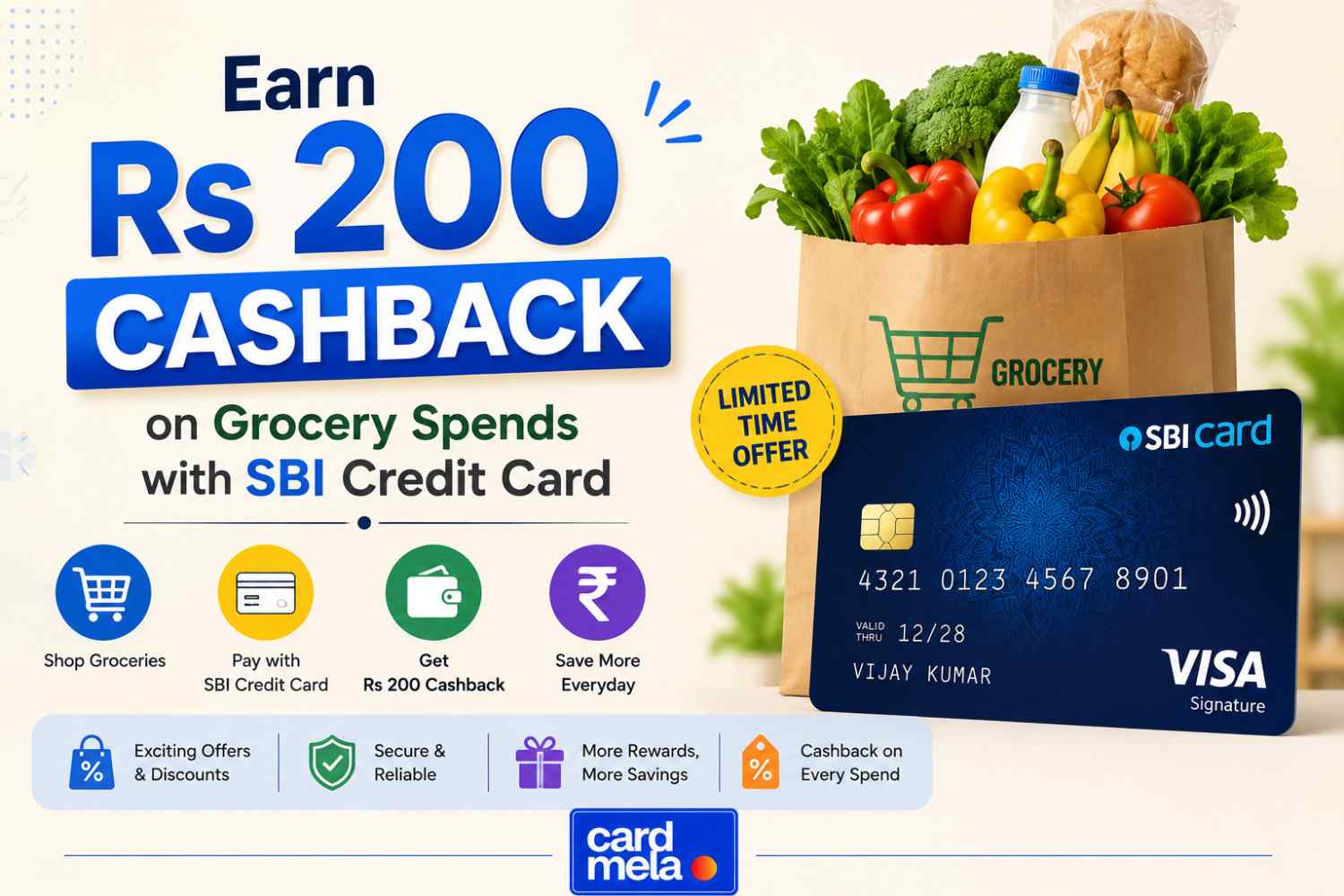
Earn Rs 200 Cashback on Grocery Spends with SBI Credit Card
Table of Contents
Earn Rs 200 Cashback on Grocery Spends with SBI Credit Card
Introduction
Household grocery spending has become one of the largest recurring monthly expenses for Indian families. Whether consumers shop through supermarkets, local kirana stores, hypermarkets, or quick-commerce apps, grocery bills now form a major part of everyday financial planning. In 2026, banks and fintech companies are aggressively targeting this spending category through cashback offers, shopping discounts, reward points, and digital payment partnerships.
One of the most talked-about cashback campaigns currently involves the SBI Cashback Credit Card, where eligible users can earn up to Rs 200 cashback on grocery spends during promotional periods. Such offers are attracting attention because modern consumers increasingly want practical savings from routine purchases rather than luxury-only banking benefits.
India’s digital shopping ecosystem has expanded rapidly with the rise of apps like BigBasket, Blinkit, and Zepto. This growth has changed grocery shopping behavior significantly, making cashback-driven spending strategies more relevant than ever before.
Organizations such as the Reserve Bank of India and National Payments Corporation of India continue strengthening India’s digital payment ecosystem, helping consumers adopt secure and reward-focused transactions more confidently.
For financially smart users, grocery cashback cards are no longer just shopping tools — they are becoming part of long-term budgeting and savings strategies.
Why Grocery Cashback Offers Are Becoming Popular
Indian consumers are becoming increasingly aware of small recurring expenses that collectively impact annual savings significantly.
Banks understand this consumer behavior shift and now aggressively compete in categories like:
- Grocery shopping
- Food delivery
- Utility payments
- Online shopping
- Quick-commerce spending
- Subscription payments
- Fuel transactions
Grocery-focused cashback offers are especially powerful because grocery expenses are unavoidable monthly purchases for nearly every household.
Even modest cashback rewards can generate meaningful annual savings when used consistently.
Benefits of Grocery Cashback Credit Cards
One major advantage of grocery cashback cards is practical savings on essential expenses. Unlike luxury-focused cards, grocery cashback cards provide direct value from purchases consumers already make every month.
Another important benefit is spending visibility. Digital transactions create detailed statements that help families track grocery budgets and spending habits more efficiently.
These cards also improve convenience because users can make secure cashless payments through physical cards, NFC payments, and UPI-linked systems.
Additionally, modern cashback ecosystems often combine grocery rewards with online shopping discounts, OTT subscriptions, dining offers, and utility bill cashback.
Users who manage spending responsibly can convert ordinary grocery purchases into long-term reward accumulation and financial optimization.
Table: Grocery Spending Trends in India
| Category | Trend in 2026 |
|---|---|
| Online grocery shopping | Rapid growth |
| Quick-commerce orders | Very high demand |
| Digital wallet usage | Increasing |
| Cashback-focused spending | Growing fast |
Table: Why Consumers Prefer Grocery Cashback Cards
| Benefit | Financial Advantage |
|---|---|
| Cashback rewards | Lower monthly costs |
| Digital tracking | Better budgeting |
| Offer integration | Extra discounts |
| Reward accumulation | Long-term savings |
Best Credit Cards for Grocery Cashback & Everyday Savings
SBI Cashback Credit Card
SBI Cashback Credit Card remains one of the strongest cards for online grocery shopping, cashback optimization, and digital spending in India. It works well for families and urban consumers who spend regularly through grocery apps and online merchants.
HSBC Live+ Credit Card
HSBC Live+ is highly suitable for users who spend heavily on groceries, dining, and entertainment categories. Its urban lifestyle rewards ecosystem is becoming increasingly popular in metro cities.
YES Bank Paisabazaar PaisaSave Credit Card
This newer cashback-focused card targets practical users seeking shopping savings, cashback benefits, and digital spending rewards.
Tata Neu Plus HDFC Credit Card
Tata Neu Plus works effectively for users shopping within Tata ecosystem brands and UPI-integrated digital platforms.
Kiwi Yes Bank Credit Card
Kiwi Yes Bank Credit Card is becoming increasingly popular among younger consumers because of its UPI-focused cashback ecosystem and app-based spending experience.
RBL Shoprite Credit Card
RBL Shoprite specifically targets grocery and supermarket spending categories, making it suitable for household-focused users.
Table: Best Grocery Cashback Cards by User Type
| User Type | Recommended Card |
|---|---|
| Online grocery user | SBI Cashback |
| Family household spender | HSBC Live+ |
| Supermarket shopper | RBL Shoprite |
| UPI-heavy spender | Kiwi Yes Bank |
| Tata ecosystem user | Tata Neu Plus |
Table: Grocery Cashback vs Traditional Spending
| Feature | Traditional Shopping | Cashback Credit Cards |
|---|---|---|
| Rewards | None | Yes |
| Spending analysis | Weak | Strong |
| Offer access | Limited | High |
| Financial optimization | Low | Strong |
Explanation
The popularity of grocery cashback cards reflects a major transformation in Indian consumer finance.
Earlier, cashback systems were mostly associated with luxury shopping and travel spending. Today, consumers increasingly demand savings from routine household purchases.
Banks now use AI-based analytics and spending behavior insights to create targeted cashback campaigns focused on categories with high recurring transaction volume.
Quick-commerce platforms have accelerated this trend further because consumers now make smaller but more frequent purchases throughout the month.
This creates more opportunities for reward accumulation and personalized digital offers.
Uses
Grocery cashback credit cards are useful for:
- Supermarket shopping
- Quick-commerce orders
- Household essentials
- Family budgeting
- Monthly grocery planning
- Digital payment convenience
- Cashback optimization
- Reward point accumulation
Families with high recurring grocery expenses benefit significantly from strategic cashback usage.
Working professionals also use grocery-focused cards to simplify expense tracking and optimize monthly budgets more efficiently.
Some users additionally combine grocery cashback systems with loyalty programs and coupon campaigns for even higher savings.
Tips
Users should always review offer terms carefully because cashback eligibility often depends on spending thresholds, merchant categories, or transaction channels.
Avoid overspending simply to unlock cashback rewards. The purpose of cashback cards is financial optimization, not unnecessary consumption.
Tracking monthly reward caps is essential because many grocery cashback cards include category-wise earning limits.
Consumers should combine grocery cashback offers strategically with sale campaigns, app discounts, and digital wallet rewards.
Timely credit card repayments remain extremely important because interest charges can easily eliminate cashback benefits.
Monitoring grocery expenses regularly through mobile banking apps helps improve long-term financial discipline and budgeting awareness.
Table: Smart Grocery Cashback Habits
| Smart Habit | Benefit |
|---|---|
| Use cashback categories wisely | Higher savings |
| Combine app offers | Better discounts |
| Track monthly limits | Reward optimization |
| Pay full dues | Avoid interest |
Table: Common Cashback Mistakes
| Mistake | Financial Impact |
|---|---|
| Overspending for rewards | Budget pressure |
| Missing due dates | Interest charges |
| Ignoring cashback limits | Lower savings |
| Poor expense tracking | Financial imbalance |
Digital Grocery Ecosystem in India
India’s grocery ecosystem is becoming increasingly digital because of AI-powered recommendations, instant delivery services, UPI growth, and fintech-driven cashback systems.
Apps like Swiggy Instamart and Amazon Fresh are changing urban shopping behavior rapidly.
Experts believe future grocery ecosystems will become even more personalized through AI-based spending analysis and predictive shopping recommendations.
The integration of cashback systems with UPI-linked credit infrastructure is expected to dominate India’s future retail payment ecosystem.
Table: Future Grocery Shopping Trends
| Trend | Impact |
|---|---|
| AI-based shopping suggestions | Smarter purchases |
| Quick-commerce growth | Faster delivery |
| Cashback ecosystems | Better savings |
| UPI-linked credit systems | Easier payments |
Internal Linking
- Best Credit Cards for Supermarket Shopping
- UPI Credit Cards That Give Real Cashback
- Best Credit Cards for Family Expenses
- Smart Cashback Tricks Most Users Ignore
- Best Credit Cards for Blinkit & Zepto Orders
- Best Cards for Utility Bills & Grocery Spending
External Linking
Conclusion
Grocery cashback credit cards represent the future of practical personal finance in India. Instead of treating grocery spending as a fixed unavoidable expense, financially smart consumers are now converting everyday purchases into long-term savings opportunities.
The SBI Cashback Credit Card and similar grocery-focused products help users reduce recurring expenses while improving budgeting discipline and digital payment convenience.
However, the true power of cashback systems depends entirely on responsible financial behavior. Smart spending, timely repayments, and controlled budgeting remain more important than reward percentages alone.
In 2026, successful consumers are not just spending digitally — they are strategically optimizing everyday household expenses to build stronger long-term financial habits.
FAQs (Frequently Asked Questions )
How do grocery cashback offers usually work?
Most grocery cashback offers require eligible transactions through approved merchants or platforms during promotional periods. Cashback may depend on minimum spending conditions or category limits.
Is SBI Cashback Credit Card good for online grocery shopping?
Yes. It is one of the strongest cashback-focused cards for online spending categories, including grocery-related digital purchases.
Can cashback rewards help reduce annual household expenses significantly?
Yes. Since groceries are recurring monthly expenses, even moderate cashback percentages can create meaningful annual savings for families.
Are quick-commerce apps eligible for cashback rewards?
Many cashback cards support transactions on platforms like Blinkit, Zepto, BigBasket, and Swiggy Instamart, depending on merchant classification rules.
Should I use multiple cashback cards for grocery spending?
Some financially organized users strategically combine different cards to maximize rewards across grocery apps, supermarkets, and household spending categories.
What is the biggest mistake people make with cashback cards?
Overspending simply to earn cashback is one of the most common financial mistakes. Cashback should support budgeting, not encourage unnecessary purchases.
Is grocery cashback useful for middle-class families?
Absolutely. Grocery cashback cards are especially useful for families managing recurring household expenses and looking for practical monthly savings.
Author Bio
CardMela, a growing platform dedicated to helping Indian consumers make smarter financial decisions. Through CardMela, he focuses on credit cards, cashback strategies, digital banking, budgeting awareness, and modern fintech trends designed specifically for Indian users.
Whether you’re looking for cashback, travel rewards, fuel savings, or lifetime free cards — CardMela helps you compare, analyze, and choose the credit card that fits your lifestyle perfectly. We partner with leading partners to bring you exclusive offers and detailed insights, so you can make smart financial decisions with confidence.
© 2025 CardMela.com. All rights reserved.
