
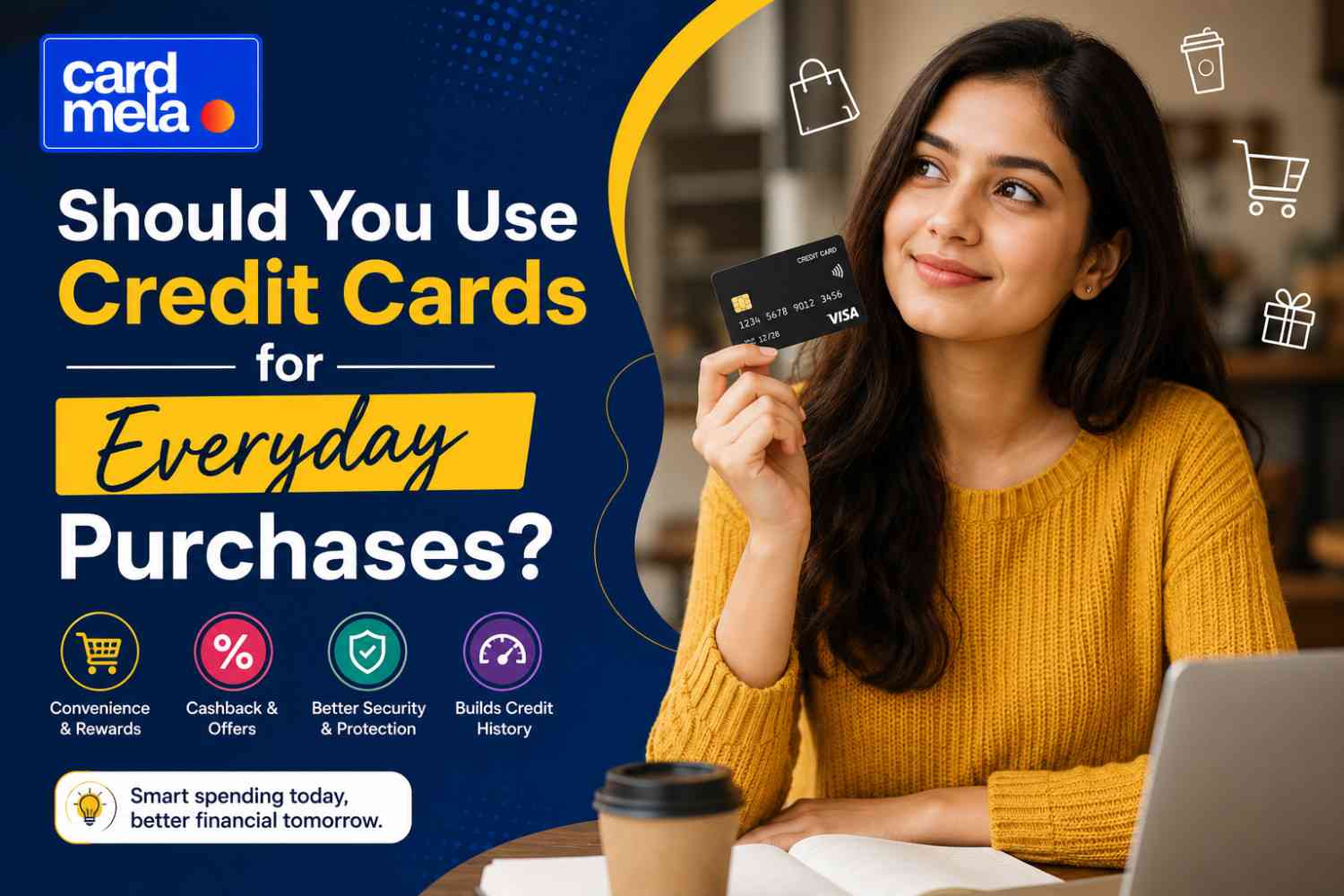
Should You Use Credit Cards for Everyday Purchases?
Table of Contents
Should You Use Credit Cards for Everyday Purchases?
Introduction
In 2026, credit cards have become an essential part of India’s digital financial ecosystem. From buying groceries and fuel to paying electricity bills, OTT subscriptions, online shopping, food delivery, and travel bookings, millions of Indians now rely on credit cards for everyday spending. However, many consumers still wonder whether using credit cards daily is financially smart or risky.
The answer depends entirely on spending discipline and financial habits. Credit cards can either become powerful wealth-management tools or dangerous debt traps depending on how users manage repayments and expenses.Financial institutions regulated by the Reserve Bank of India are increasingly promoting digital transactions, cashback ecosystems, AI-powered banking systems, and secure credit-based spending platforms to encourage cashless economic growth in India.
Today’s modern consumers are no longer using credit cards only for emergencies. Instead, they strategically use reward systems, cashback benefits, airport lounge access, fuel savings, and online shopping discounts to reduce everyday expenses and improve overall financial efficiency.Apps like Google Pay, PhonePe, and UPI-linked credit systems are making everyday card usage easier and faster than ever before.For financially disciplined users, everyday credit card spending can generate measurable monthly savings while improving credit scores and digital convenience.
Why Credit Cards Are Becoming More Common for Daily Spending
India’s digital payment revolution has changed consumer behavior dramatically over the last few years. Online shopping growth, fintech innovation, contactless payments, UPI integration, and cashback ecosystems are pushing more users toward credit-based transactions.
Banks and fintech companies aggressively promote reward-driven spending systems through:
- Cashback offers
- Reward points
- Fuel surcharge waivers
- EMI options
- Travel rewards
- Dining benefits
- OTT subscription offers
- Utility bill cashback
Young professionals and digitally active consumers especially prefer credit cards because they combine flexibility, rewards, convenience, and financial tracking in one system.
Benefits of Using Credit Cards for Everyday Purchases
One major advantage is cashback optimization. Everyday expenses such as grocery shopping, utility bills, online shopping, fuel payments, and food delivery can generate substantial annual savings through reward systems.
Another important benefit is improved financial tracking. Credit card statements and mobile banking apps help users analyze spending patterns more efficiently than cash transactions.
Responsible card usage also improves credit scores because timely repayments demonstrate financial discipline to banks and lenders.
Credit cards additionally improve emergency financial flexibility because users can access short-term liquidity during urgent situations.
Premium users also benefit from travel insurance, lounge access, dining privileges, concierge services, and exclusive shopping discounts.
Table: Everyday Expenses That Work Well with Credit Cards
| Expense Type | Benefit |
|---|---|
| Grocery shopping | Cashback |
| Fuel payments | Fuel rewards |
| Online shopping | Discounts |
| Utility bills | Monthly savings |
| Dining | Restaurant offers |
Table: Debit Card vs Credit Card for Daily Usage
| Feature | Debit Card | Credit Card |
|---|---|---|
| Cashback rewards | Limited | Strong |
| Credit score improvement | No | Yes |
| Emergency flexibility | Low | High |
| Fraud protection | Moderate | Strong |
Best NEW Credit Cards for Everyday Purchases
HSBC Live+ Credit Card
HSBC Live+ is one of the newest lifestyle-focused cashback cards targeting dining, entertainment, and urban spending categories. It is highly suitable for users with active digital lifestyles.
AU Bank Ixigo Credit Card
AU Ixigo Credit Card is becoming increasingly popular among travelers and online spenders because of travel rewards, digital-friendly benefits, and cashback systems.
YES Bank Reserv Credit Card
YES Bank Reserv targets premium users seeking higher reward earning opportunities, luxury privileges, and strong digital banking integration.
Scapia Federal Credit Card
Scapia Federal Credit Card is designed for digitally active travelers who want app-based reward management and simplified travel benefits.
Tata Neu Infinity HDFC Credit Card
Tata Neu Infinity is highly suitable for users spending regularly across Tata ecosystem brands, UPI transactions, groceries, and shopping categories.
IDFC FIRST Wealth Credit Card
IDFC FIRST Wealth offers strong reward systems, lifestyle benefits, and attractive long-term value without heavy annual fee pressure.
Table: Best New Credit Cards by User Type
| User Type | Best Card |
|---|---|
| Digital-first spender | Tata Neu Infinity |
| Travel enthusiast | AU Ixigo |
| Dining & entertainment user | HSBC Live+ |
| Fintech-focused user | OneCard |
| Premium spender | YES Bank Reserv |
Table: Which Card Fits Your Spending Style?
| Spending Style | Recommended Card |
|---|---|
| Frequent UPI transactions | Tata Neu Infinity |
| Online shopping | OneCard |
| Premium lifestyle | YES Bank Reserv |
| Travel-focused | Scapia Federal |
| Food & dining | HSBC Live+ |
Risks of Using Credit Cards Daily
Despite the benefits, irresponsible usage can create serious financial problems.
The biggest danger is emotional overspending. Because users are not immediately paying from bank balances, they may spend more carelessly than with cash.
Another major issue is revolving debt. Carrying unpaid balances leads to high interest charges that can quickly eliminate cashback rewards and create long-term financial pressure.
Some users also misuse EMI conversions excessively, leading to hidden financial stress and poor budgeting discipline.
Late payments negatively affect credit scores and may reduce future loan approval chances significantly.
Therefore, responsible spending behavior remains the foundation of successful credit card usage.
Explanation
Credit cards work best when users treat them as payment tools rather than borrowing tools.
Financially disciplined users spend only what they can repay fully every month. This allows them to enjoy cashback rewards, lifestyle benefits, and credit score improvement without paying unnecessary interest.
Modern banking apps also help users track spending in real time through AI-based insights, budget monitoring, and transaction alerts.
Consumers who combine budgeting discipline with strategic reward optimization often gain significant long-term financial value from daily credit card usage.
Uses
Everyday credit card usage is useful for:
- Utility bill payments
- Fuel purchases
- Grocery shopping
- OTT subscriptions
- Dining expenses
- Online shopping
- UPI-linked payments
- Travel bookings
Business owners and freelancers also benefit from transaction tracking, accounting convenience, and short-term liquidity flexibility.
Premium users often combine daily spending with travel rewards, hotel discounts, and airport privileges.
Tips
Always pay full dues before the due date because interest charges are the biggest financial danger in credit card usage.
Users should maintain monthly spending limits and avoid impulsive purchases made only to earn rewards.
Tracking reward expiry dates, cashback caps, and annual fees is essential for maximizing card value.
Consumers should also enable app-based alerts and transaction notifications for fraud protection and spending control.
Using multiple specialized cards strategically can maximize rewards, but managing too many cards without discipline may create financial confusion.
Maintaining low credit utilization improves long-term credit health significantly.
Table: Smart Everyday Credit Card Habits
| Habit | Financial Benefit |
|---|---|
| Paying bills fully | Avoids interest |
| Tracking spending | Better budgeting |
| Using category-specific cards | Higher rewards |
| Keeping low utilization | Better credit score |
Table: Common Credit Card Mistakes
| Mistake | Result |
|---|---|
| Missing due dates | Credit score damage |
| Paying minimum due only | High interest |
| Emotional spending | Debt pressure |
| Ignoring statements | Fraud risks |
Digital Banking & AI-Based Spending Systems
India’s digital banking ecosystem is evolving rapidly through AI-powered financial management tools, contactless payments, UPI-linked credit systems, and app-driven reward platforms.
Companies like Visa and RuPay are expanding secure transaction infrastructure across India.
Experts believe future banking systems will automatically optimize rewards, suggest smarter payment methods, and improve financial decision-making through AI-driven analytics.
Table: Future Trends in Credit Card Usage
| Trend | Impact |
|---|---|
| AI-powered budgeting | Smarter spending |
| UPI credit integration | Faster payments |
| Contactless systems | Better convenience |
| Personalized cashback | Higher savings |
Internal Linking
- Best Cashback Credit Cards in India
- Credit Cards That Work Best with Google Pay & PhonePe
- Best Credit Cards for Road Trips & Fuel
- Best Credit Cards for UPI Payments
- Mistakes That Kill Your Credit Score
- Best Credit Cards for OTT Subscriptions
External Linking
Conclusion
Using credit cards for everyday purchases can be extremely beneficial when combined with disciplined financial behavior. Smart users can generate cashback, optimize expenses, improve credit scores, and enhance digital convenience significantly.
However, credit cards should never become tools for uncontrolled lifestyle inflation or emotional spending. Financial discipline, timely repayments, and budgeting awareness remain more important than reward percentages or premium branding.
In 2026, financially successful consumers are not avoiding credit cards — they are learning how to use them strategically as tools for smarter spending, financial efficiency, and long-term money management.
FAQs (Frequently Asked Questions )
Should I use credit cards for groceries and utility bills?
Yes, if you can repay dues fully on time. Everyday expenses are among the best categories for cashback and reward optimization.
Can daily credit card usage improve credit scores?
Responsible usage combined with timely repayments and low utilization helps improve credit scores over time.
What is the biggest risk of using credit cards daily?
Overspending and unpaid balances are the biggest risks because high interest charges can create long-term debt problems.
Is UPI-linked credit card spending safe?
Yes. UPI-linked credit systems are becoming increasingly secure and convenient when combined with proper transaction monitoring and fraud protection habits.
How many credit cards should an average user have?
There is no fixed number, but most financially organized users maintain 2–4 cards strategically for different spending categories.
Are lifetime free cards worth using daily?
Yes. Good lifetime free cards can provide strong long-term value if rewards align with spending habits.
Should students use credit cards for everyday spending?
Students should use credit cards cautiously and only after understanding budgeting discipline and repayment responsibilities properly.
Author Bio
CardMela, a growing platform dedicated to helping Indian consumers make smarter financial decisions. Through CardMela, he focuses on credit cards, cashback strategies, digital banking, personal finance awareness, and modern fintech trends designed specifically for Indian users.
Whether you’re looking for cashback, travel rewards, fuel savings, or lifetime free cards — CardMela helps you compare, analyze, and choose the credit card that fits your lifestyle perfectly. We partner with leading partners to bring you exclusive offers and detailed insights, so you can make smart financial decisions with confidence.
© 2025 CardMela.com. All rights reserved.
