
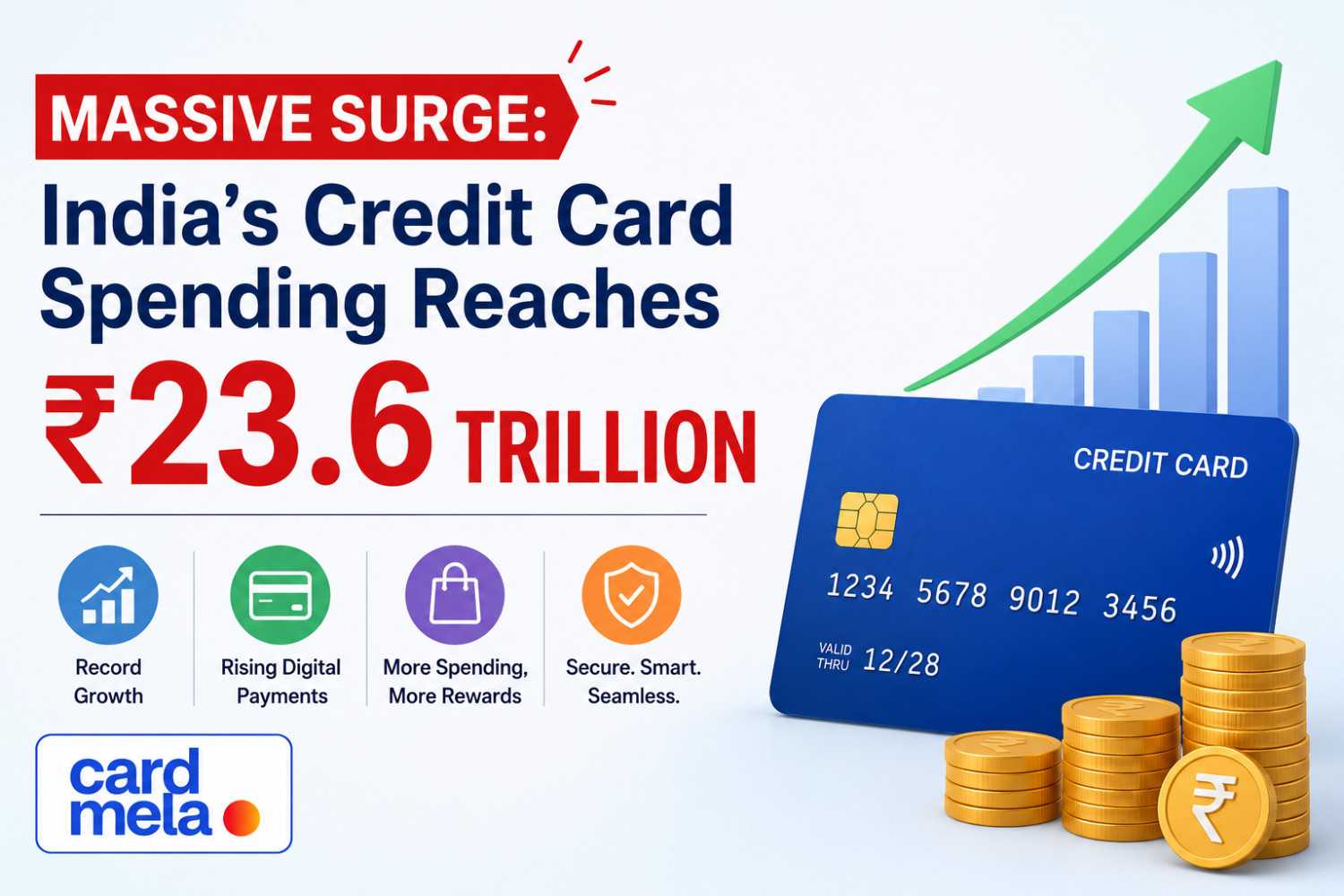
Massive Surge: India’s Credit Card Spending Reaches ₹23.6 Trillion
Table of Contents
Massive Surge: India’s Credit Card Spending Reaches ₹23.6 Trillion
Introduction
India’s digital payment revolution has reached another historic milestone as credit card spending in the country touched a record ₹23.6 trillion. This remarkable growth reflects changing consumer behavior, rising digital adoption, expanding ecommerce ecosystems, growing middle-class consumption, and increasing trust in cashless transactions.
Over the last few years, India has transformed into one of the world’s fastest-growing digital economies. Consumers are now using credit cards not only for luxury shopping but also for everyday expenses such as groceries, utility bills, fuel, subscriptions, education fees, travel bookings, food delivery, and UPI-linked transactions.
Banks regulated by the Reserve Bank of India are aggressively expanding credit access while payment networks like Visa, Mastercard, and RuPay continue strengthening India’s digital transaction infrastructure.
The rise of ecommerce platforms such as Amazon India and Flipkart has further accelerated card-based spending behavior.
However, while record spending growth highlights rising economic activity and digital convenience, it also raises important discussions around financial discipline, debt management, credit score awareness, and responsible borrowing.
Understanding why credit card spending is growing so rapidly can help consumers use digital credit systems more intelligently in 2026.
Why Credit Card Spending Is Growing Rapidly in India
Several major factors are driving the rise in credit card transactions across India:
- Digital payment adoption
- Ecommerce expansion
- Cashback rewards
- EMI availability
- UPI-linked credit cards
- Online subscriptions
- Travel recovery
- Lifestyle spending growth
- Fintech innovation
- AI-based credit approval systems
Consumers today increasingly prefer convenience, rewards, and flexible payment systems instead of cash transactions.
Young professionals and urban consumers especially rely heavily on credit cards for recurring monthly spending.
Table: Major Drivers Behind Credit Card Spending Growth
| Factor | Impact |
|---|---|
| Ecommerce growth | Higher online spending |
| Cashback systems | Increased card usage |
| EMI offers | Bigger purchases |
| UPI integration | Wider acceptance |
| Digital banking | Faster adoption |
Table: Categories Driving Credit Card Transactions
| Spending Category | Growth Trend |
|---|---|
| Online shopping | Very high |
| Grocery spending | Rapid growth |
| Travel bookings | Strong recovery |
| Food delivery | Increasing |
| Utility payments | High adoption |
Benefits of Rising Digital Credit Ecosystem
India’s expanding credit card ecosystem offers several financial and technological benefits.
One major advantage is transaction convenience. Consumers can complete purchases instantly without carrying cash.
Reward systems additionally help users earn cashback, travel points, shopping discounts, and lifestyle benefits from routine spending.
Credit cards also improve transaction traceability, helping users monitor expenses more efficiently through digital statements and mobile banking apps.
EMI systems make expensive purchases more affordable by spreading costs across manageable monthly installments.
For businesses, digital transactions improve payment efficiency, reduce cash-handling risks, and accelerate ecommerce growth.
The rapid expansion of digital credit infrastructure is also helping India move closer toward a highly integrated cashless economy.
Best Credit Cards for Cashback, Rewards & Digital Spending
SBI Cashback Credit Card
SBI Cashback Credit Card is one of the strongest cards for online shopping, digital spending, and cashback-focused users seeking practical rewards.
HDFC Millennia Credit Card
HDFC Millennia works well for ecommerce users, subscription payments, app-based spending, and lifestyle cashback categories.
Axis Bank Atlas Credit Card
Axis Atlas is becoming highly popular among travel-focused consumers seeking premium rewards and airline benefits.
Scapia Federal Credit Card
Scapia Federal Credit Card targets modern digital users seeking travel flexibility and app-driven financial experiences.
YES Bank Marquee Credit Card
YES Bank Marquee provides premium rewards, entertainment privileges, and luxury spending benefits for high-value consumers.
Tata Neu Infinity HDFC Credit Card
Tata Neu Infinity combines shopping rewards, UPI benefits, and digital payment convenience for modern consumers.
Table: Best Credit Cards by Spending Style
| Spending Style | Recommended Card |
|---|---|
| Online shopping | SBI Cashback |
| Digital subscriptions | HDFC Millennia |
| Premium travel | Axis Atlas |
| UPI spending | Tata Neu Infinity |
| Lifestyle rewards | YES Bank Marquee |
Table: Credit Card vs Cash Transactions
| Feature | Cash Payments | Credit Cards |
|---|---|---|
| Rewards | None | Yes |
| EMI facility | No | Available |
| Digital tracking | Limited | Strong |
| Online usability | Weak | Excellent |
Explanation
The ₹23.6 trillion spending milestone reflects deeper structural changes in India’s economy.
Consumers today increasingly prioritize convenience, flexibility, and reward optimization. Credit cards are no longer viewed only as borrowing tools — they are becoming central components of lifestyle management and digital financial ecosystems.
Fintech innovation has made credit card approvals faster through AI-based risk analysis, digital KYC systems, and app-driven onboarding.
The rise of UPI-linked credit cards is also expanding credit card accessibility beyond traditional urban premium users.
Experts believe India’s credit ecosystem will continue growing rapidly as younger consumers adopt digital-first financial habits.
However, rising spending also increases the importance of financial literacy because uncontrolled credit usage can create long-term debt risks.
Uses of Credit Cards in Modern India
Modern consumers use credit cards for:
- Online shopping
- Grocery purchases
- EMI financing
- Fuel payments
- Travel bookings
- Utility bills
- Subscription services
- Digital wallet transactions
- Emergency spending
- Business expenses
Many users now combine cashback systems, sale offers, loyalty rewards, and EMI plans strategically to optimize monthly expenses.
Professionals and entrepreneurs also use credit cards for cash flow management and business-related purchases.
Tips for Responsible Credit Card Usage
Consumers should always spend within manageable repayment limits rather than treating credit limits as free income.
Timely bill payments are extremely important because missed payments can damage credit scores and increase debt burden through interest charges.
Users should track spending regularly through mobile banking apps and maintain low credit utilization ratios whenever possible.
Avoid taking unnecessary EMIs or applying for multiple cards simultaneously without financial planning.
Reward systems and cashback offers should support budgeting discipline rather than encourage impulsive lifestyle spending.
Consumers should additionally monitor fraud alerts and enable transaction notifications for better security management.
Table: Smart Credit Card Habits
| Habit | Benefit |
|---|---|
| Full bill repayment | Avoid interest |
| Low credit utilization | Better credit score |
| Expense tracking | Budget discipline |
| Cashback optimization | Higher savings |
Table: Common Credit Card Mistakes
| Mistake | Financial Risk |
|---|---|
| Minimum due payments | High interest burden |
| Multiple EMIs | Budget pressure |
| Overspending | Debt accumulation |
| Missed due dates | Credit score damage |
How UPI Credit Cards Are Changing India
India’s payment ecosystem is evolving rapidly through UPI-linked credit cards and digital payment integrations.
The National Payments Corporation of India continues expanding UPI-based payment innovation, allowing users to connect RuPay credit cards directly with UPI apps.
This innovation is significantly increasing small-ticket credit card transactions across India.
Apps like Google Pay, PhonePe, and Paytm are further accelerating adoption.
Experts believe India’s future credit ecosystem will become increasingly app-driven, AI-powered, and highly personalized.
Table: Future Trends in India’s Credit Card Industry
| Trend | Expected Impact |
|---|---|
| UPI-linked credit cards | Higher usage |
| AI-based lending | Faster approvals |
| Cashback ecosystems | More competition |
| App-driven banking | Better convenience |
Internal Linking
- Best Cashback Credit Cards in India
- Credit Cards That Work Best with Google Pay & PhonePe
- How to Improve Your Credit Score Fast
- Best Credit Cards for Online Shopping
- Buy Now Pay Later vs Credit Card EMI
- Mistakes That Kill Your Credit Score
- Best Credit Cards for Grocery Shopping
External Linking
Conclusion
India’s record ₹23.6 trillion credit card spending milestone highlights the country’s rapid transformation into a digital-first financial economy. Consumers today are increasingly relying on credit cards for convenience, rewards, flexible payments, and lifestyle optimization.
The growth of ecommerce, fintech innovation, UPI integration, and AI-driven banking systems is accelerating this trend even further.
However, the future success of India’s digital credit ecosystem will depend not only on higher spending but also on responsible financial behavior, credit awareness, and long-term budgeting discipline.
Smart consumers in 2026 are not simply spending more — they are using digital credit systems strategically to optimize savings, improve convenience, and manage financial flexibility more effectively.
FAQs (Frequently Asked Questions )
Why has India’s credit card spending crossed ₹23.6 trillion in 2026?
India’s credit card spending has grown rapidly because consumers are increasingly shifting toward digital transactions, online shopping, cashback systems, and flexible EMI-based purchases. The expansion of ecommerce platforms, quick-commerce apps, UPI-linked credit cards, and mobile banking has made credit card usage more convenient than ever before. Rising middle-class income levels and aggressive reward programs from banks have also encouraged people to use cards for everyday expenses instead of relying only on cash or debit cards.
What does record credit card spending say about India’s digital economy?
The ₹23.6 trillion spending milestone highlights India’s transformation into a highly digitized consumer economy. It reflects growing confidence in online payments, fintech innovation, app-based banking systems, and cashless financial ecosystems. Consumers today are comfortable making transactions digitally for groceries, travel, subscriptions, education fees, and utility bills. This growth also indicates that India’s financial infrastructure has become stronger, faster, and more accessible across urban and semi-urban regions.
Are credit cards becoming more popular among young Indians?
Yes. Young professionals and digitally active consumers are driving a major part of India’s credit card growth. Gen Z and millennials prefer credit cards because they offer cashback, reward points, airport lounge access, EMI facilities, online discounts, and UPI compatibility. Many younger users also use cards strategically for building credit scores, managing subscriptions, and improving spending flexibility while maintaining digital-first lifestyles.
How do cashback credit cards influence spending behavior?
Cashback credit cards psychologically encourage consumers to use digital payments more frequently because users feel they are saving money on every transaction. Cashback systems are especially attractive for categories like groceries, fuel, food delivery, utility bills, and online shopping. However, while cashback can improve savings when used responsibly, it can also lead to unnecessary spending if users chase rewards without budgeting properly.
Is increasing credit card spending dangerous for consumers?
Credit card usage itself is not dangerous when managed responsibly. Problems usually arise when consumers overspend beyond repayment capacity, rely heavily on EMIs, or repeatedly pay only minimum due amounts. High-interest charges and poor repayment discipline can quickly create long-term debt pressure. Financial awareness, timely bill payments, and spending control are essential for maintaining healthy credit card habits.
How are UPI-linked credit cards changing the Indian payment ecosystem?
UPI-linked credit cards are making credit-based payments accessible even for smaller daily transactions. Earlier, credit cards were mainly used for large purchases or online shopping. Now, users can link RuPay credit cards directly with UPI apps and make payments at local shops, restaurants, and small businesses. This integration is expanding the overall digital transaction ecosystem significantly and increasing everyday card adoption across India.
Why are banks offering so many credit card rewards and offers now?
Banks and fintech companies compete aggressively to acquire long-term customers because credit card users generate revenue through merchant transactions, annual fees, EMI interest, and financial partnerships. Rewards like cashback, lounge access, shopping discounts, and travel benefits help banks attract high-spending and digitally active consumers. Personalized AI-driven reward systems are also becoming more common as banks analyze user spending behavior more deeply.
Author Bio
The founder and content strategist behind CardMela, a fast-growing platform dedicated to helping Indian consumers make smarter financial decisions. With years of experience in the banking and credit card industry, he specializes in simplifying complex financial topics such as credit cards, digital payments, UPI innovations, cashback strategies, and personal finance trends for Indian users.
Whether you’re looking for cashback, travel rewards, fuel savings, or lifetime free cards — CardMela helps you compare, analyze, and choose the credit card that fits your lifestyle perfectly. We partner with leading partners to bring you exclusive offers and detailed insights, so you can make smart financial decisions with confidence.
© 2025 CardMela.com. All rights reserved.
