
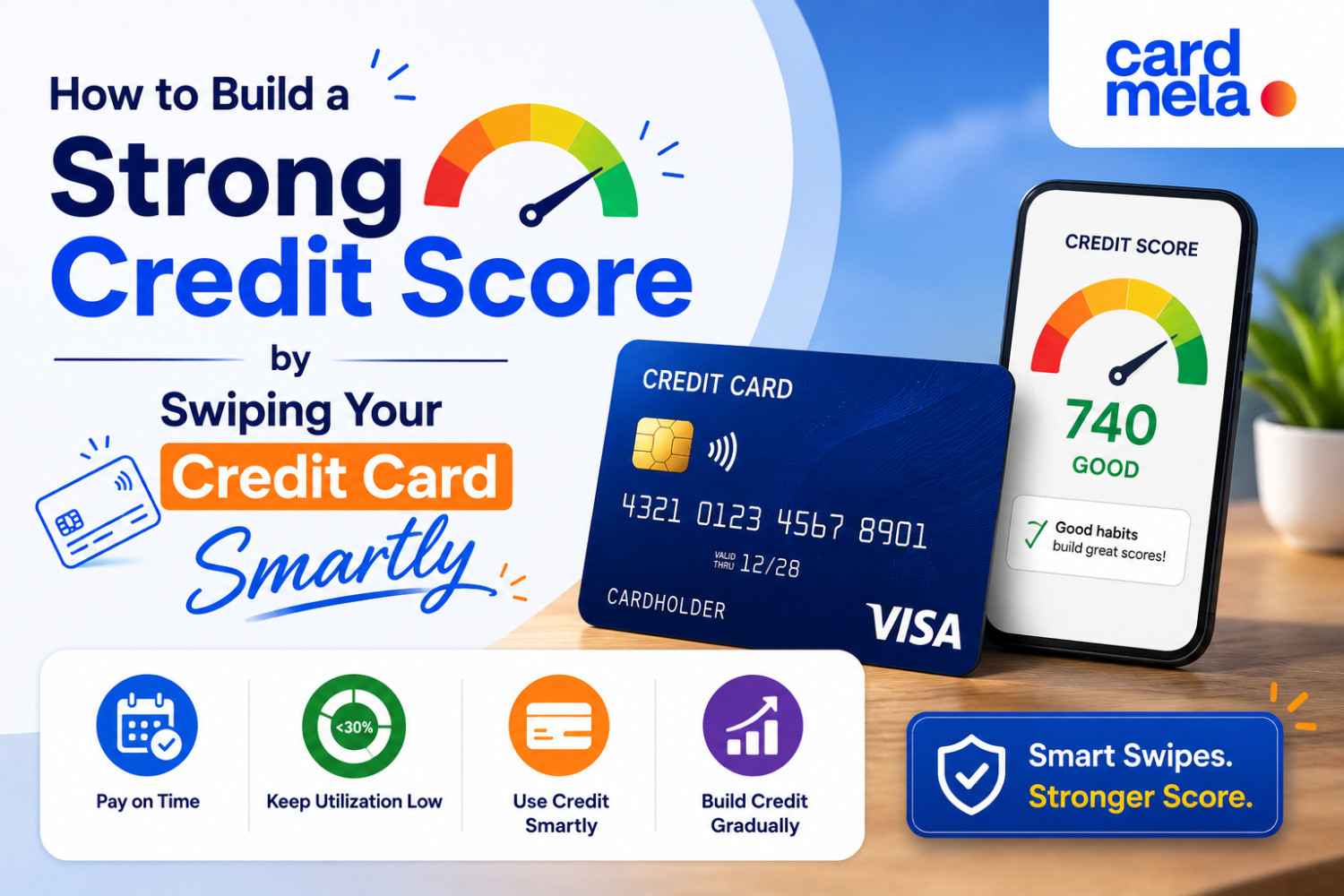
10 Smart Ways to Build a Strong Credit Score by Using Credit Cards
Table of Contents
10 Smart Ways to Build a Strong Credit Score by Using Credit Cards
Introduction
In 2026, credit scores have become one of the most important financial indicators in India’s digital banking ecosystem. Whether someone wants a home loan, car loan, personal loan, business funding, premium credit card, or even a better insurance premium, lenders increasingly analyze credit scores before approving applications.
A strong credit score reflects financial discipline, repayment behavior, and responsible borrowing habits.
Interestingly, one of the easiest ways to build a strong credit score is through regular and intelligent use of credit cards.
Many Indians still fear credit cards because they associate them with debt traps and overspending. However, financially aware consumers understand that smart credit card usage can actually improve financial health instead of damaging it.
When used correctly, simple daily swiping habits such as grocery shopping, fuel payments, utility bill payments, online shopping, and travel bookings can gradually strengthen credit history and improve creditworthiness.
Banks like HDFC Bank, ICICI Bank, Axis Bank, and SBI Card actively encourage responsible card usage because strong repayment customers are highly valuable to financial institutions.
Credit bureaus such as TransUnion CIBIL analyze multiple financial behaviors including:
- Payment history
- Credit utilization
- Account age
- Credit mix
- Repayment consistency
- Outstanding debt levels
Building a strong score is not about spending huge amounts of money. It is about using credit strategically and responsibly.
Understanding how smart swiping behavior affects credit scores can help Indian consumers unlock better financial opportunities in the future.
What Is a Credit Score?
A credit score is a numerical representation of an individual’s creditworthiness based on borrowing and repayment behavior.
In India, credit scores usually range between:
- 300 to 900
Higher scores indicate stronger financial discipline and lower lending risk.
Generally:
- 750+ = Excellent
- 700–749 = Good
- 650–699 = Average
- Below 650 = Weak credit profile
Banks and lenders use these scores while evaluating loans and premium financial products.
Table: Credit Score Ranges Explained
| Score Range | Credit Quality |
|---|---|
| 750–900 | Excellent |
| 700–749 | Good |
| 650–699 | Average |
| Below 650 | Risky |
Table: Factors Affecting Credit Scores
| Factor | Importance |
|---|---|
| Payment history | Very high |
| Credit utilization | High |
| Credit age | Moderate |
| Credit mix | Moderate |
| Loan inquiries | Moderate |
How Swiping Credit Cards Builds Credit Score
Every time consumers use their credit card responsibly and repay dues on time, they create positive repayment history.
Banks report credit card usage and repayment behavior regularly to credit bureaus like TransUnion CIBIL and Experian.
Responsible swiping behavior demonstrates that consumers can handle borrowed money properly.
Regular card activity also keeps credit accounts active, which contributes positively to long-term credit profile stability.
Consumers who use cards moderately and maintain low utilization ratios are generally viewed more favorably by lenders.
The key is disciplined usage rather than excessive spending.
Benefits of Building Credit Score Through Credit Cards
A strong credit score opens access to multiple financial advantages.
Consumers with healthy scores often receive:
- Faster loan approvals
- Lower interest rates
- Higher credit limits
- Premium credit cards
- Better EMI offers
- Improved negotiating power
- Easier rental approvals
- Enhanced financial credibility
Banks also provide exclusive lifestyle and travel privileges to financially disciplined customers.
Young professionals particularly benefit because strong early credit history creates long-term financial flexibility.
Consumers with strong scores additionally face lower rejection risk during future borrowing needs.
Best Credit Cards to Build Credit Score in India
Amazon Pay ICICI Credit Card
Excellent for beginners seeking cashback rewards and regular online spending opportunities while building credit history gradually.
Axis Bank ACE Credit Card
Axis ACE works well for utility payments, daily spending, and UPI-linked digital transaction ecosystems.
HDFC Bank Millennia Credit Card
Millennia targets digitally active consumers looking to combine rewards with responsible credit building.
SBI SimplyCLICK Credit Card
Ideal for online shoppers seeking beginner-friendly rewards and active digital usage benefits.
IDFC FIRST WOW Credit Card
A strong option for beginners or low-credit-history users seeking secured credit building opportunities.
AU LIT Credit Card
AU LIT offers flexible digital features and modern spending customization for young professionals.
Table: Best Credit Cards by User Type
| User Type | Recommended Card |
|---|---|
| Beginners | IDFC FIRST WOW |
| Cashback seekers | Amazon Pay ICICI |
| Online shoppers | SBI SimplyCLICK |
| Young professionals | AU LIT |
| Utility bill users | Axis ACE |
Table: Daily Expenses That Help Build Credit Score
| Expense Type | Credit Building Impact |
|---|---|
| Grocery shopping | Positive |
| Fuel payments | Positive |
| Utility bills | Positive |
| Mobile recharge | Positive |
| Travel bookings | Positive |
Explanation
Credit cards function as short-term revolving credit systems.
When consumers swipe cards, banks temporarily pay merchants on behalf of users. Consumers later repay banks either fully or partially.
Credit bureaus track how responsibly consumers manage this borrowing cycle.
The most important factor is payment discipline.
Even small monthly transactions such as fuel purchases or grocery bills can contribute positively if repayments happen consistently before due dates.
Consumers do not need luxury spending patterns to build strong scores.
In fact, moderate spending combined with timely repayment often produces healthier long-term credit profiles than aggressive borrowing behavior.
Uses of a Strong Credit Score
Strong credit scores help consumers throughout their financial journey.
A healthy score improves eligibility for:
- Home loans
- Vehicle financing
- Business loans
- Personal loans
- Premium credit cards
- Higher credit limits
- Better EMI offers
- Rental agreements
Some employers and financial institutions also review credit profiles while evaluating applicants for sensitive financial positions.
Strong scores therefore provide both direct and indirect financial advantages.
Tips to Build Strong Credit Score Through Card Swiping
Consumers should first focus on paying bills fully and on time every month because payment history contributes heavily to overall scores.
Maintaining low credit utilization is equally important. Experts generally recommend using less than 30% of total credit limits.
Users should avoid unnecessary loan applications because frequent inquiries may negatively impact scores temporarily.
Keeping old credit cards active helps strengthen account age and long-term credit history.
Consumers should additionally monitor credit reports regularly to identify errors or fraudulent activity quickly.
Responsible swiping means using cards strategically rather than emotionally.
Table: Smart Credit Score Building Tips
| Strategy | Benefit |
|---|---|
| Pay before due date | Strong repayment history |
| Maintain low utilization | Better score stability |
| Keep old cards active | Longer credit age |
| Monitor credit reports | Error detection |
Table: Common Credit Card Mistakes
| Mistake | Financial Impact |
|---|---|
| Late payments | Score reduction |
| High utilization | Risk profile increase |
| Minimum payment trap | Higher interest |
| Frequent loan applications | Multiple inquiries |
How Digital Payments Are Changing Credit Building in India
India’s financial ecosystem is rapidly evolving because of fintech innovation and digital payment adoption.
Consumers increasingly use:
- UPI-linked credit cards
- Mobile wallets
- App-based EMI systems
- Digital banking apps
- AI-driven financial tracking systems
Organizations like National Payments Corporation of India continue expanding India’s digital transaction infrastructure.
Banks are now analyzing digital payment behavior more intelligently to evaluate consumer creditworthiness.
Young Indians who actively participate in digital financial ecosystems often build credit histories faster than previous generations.
Experts believe AI-driven financial scoring systems will become increasingly sophisticated over the next few years.
Table: Future Trends in Credit Scoring
| Trend | Expected Impact |
|---|---|
| AI-based credit analysis | Better personalization |
| Digital payment tracking | Faster scoring |
| UPI-linked credit systems | Wider access |
| Fintech integration | Improved financial inclusion |
Internal Linking
- Best Cashback Credit Cards in India
- Credit Cards That Work Best with Google Pay & PhonePe
- How Reward Points Really Work
- Smart Ways to Improve Your Credit Score
- How Credit Card EMI Works
- Best Beginner Credit Cards in India
- Why Credit Utilization Matters
- How to Avoid Credit Card Debt
- Best Credit Cards for Online Shopping
- Travel Rewards vs Cashback Cards Explained
External Linking
Conclusion
Building a strong credit score does not require luxury spending or complicated financial strategies.
Simple daily swiping habits combined with disciplined repayments can gradually create a powerful financial profile over time.
Credit cards, when used responsibly, become valuable tools for improving financial flexibility, accessing better borrowing opportunities, and strengthening long-term financial credibility.
Consumers who maintain low utilization, pay bills on time, monitor credit reports carefully, and avoid emotional spending usually enjoy strong credit scores and healthier financial futures.
As India’s digital financial ecosystem continues evolving rapidly, smart credit behavior will become even more important for accessing premium financial products and opportunities in the coming years.
FAQs (Frequently Asked Questions )
How can young professionals build strong credit scores quickly without taking large loans?
Young professionals can build excellent scores by using credit cards regularly for daily expenses such as fuel, groceries, subscriptions, and utility bills while ensuring full repayment every month. Responsible card usage often creates strong credit history faster than unnecessary borrowing.
Why is disciplined swiping more important than high spending?
Credit bureaus focus more on repayment behavior and utilization control than luxury spending levels. Moderate spending with perfect payment discipline usually creates healthier long-term credit profiles compared to aggressive spending patterns.
Can reward-focused spending improve financial habits?
Yes, if consumers remain disciplined. Cashback systems, reward points, and travel benefits often encourage organized spending and active bill monitoring. However, chasing rewards irresponsibly may lead to overspending and debt accumulation.
How do digital payment ecosystems influence credit building?
UPI-linked credit cards, app-based payment systems, and fintech integrations help consumers use credit more frequently in daily life, increasing opportunities to build positive repayment history through small routine transactions.
Why should consumers avoid paying only the minimum amount due?
Minimum payments prevent immediate late payment penalties but leave large outstanding balances that generate heavy interest charges. Over time, revolving debt may increase financial pressure and negatively impact credit utilization ratios.
Can multiple credit cards help improve credit score?
Multiple cards can help if managed carefully because higher total credit limits may reduce utilization ratios. However, poor management, missed payments, or excessive spending across multiple cards can damage scores significantly.
How important is credit age while building a strong score?
Longer credit history generally improves lender confidence because it provides more repayment behavior data. Keeping older accounts active responsibly can strengthen long-term credit profiles.
Can inactive credit cards hurt financial health?
Inactive cards themselves may not directly hurt scores, but consumers should monitor them carefully because unused cards can still carry annual fees, fraud risks, or closure-related impacts on total credit limits.
Why do fintech companies target first-time credit users aggressively?
India’s young digital population represents enormous growth potential for banks and fintech companies. Entry-level credit products help companies onboard consumers early into long-term financial ecosystems.
What is the smartest long-term strategy for building excellent credit?
The best strategy combines low utilization, timely repayments, controlled borrowing, regular monitoring, and emotionally disciplined spending habits. Consistency matters far more than short-term financial tricks.
Author Bio
The founder and content strategist behind CardMela, a fast-growing platform dedicated to helping Indian consumers make smarter financial decisions. With years of experience in banking, fintech analysis, credit scoring systems, and digital payments, he specializes in simplifying complex financial topics and helping users maximize rewards, improve financial discipline, and build stronger financial futures through responsible credit behavior in India.
Whether you’re looking for cashback, travel rewards, fuel savings, or lifetime free cards — CardMela helps you compare, analyze, and choose the credit card that fits your lifestyle perfectly. We partner with leading partners to bring you exclusive offers and detailed insights, so you can make smart financial decisions with confidence.
© 2025 CardMela.com. All rights reserved.
