
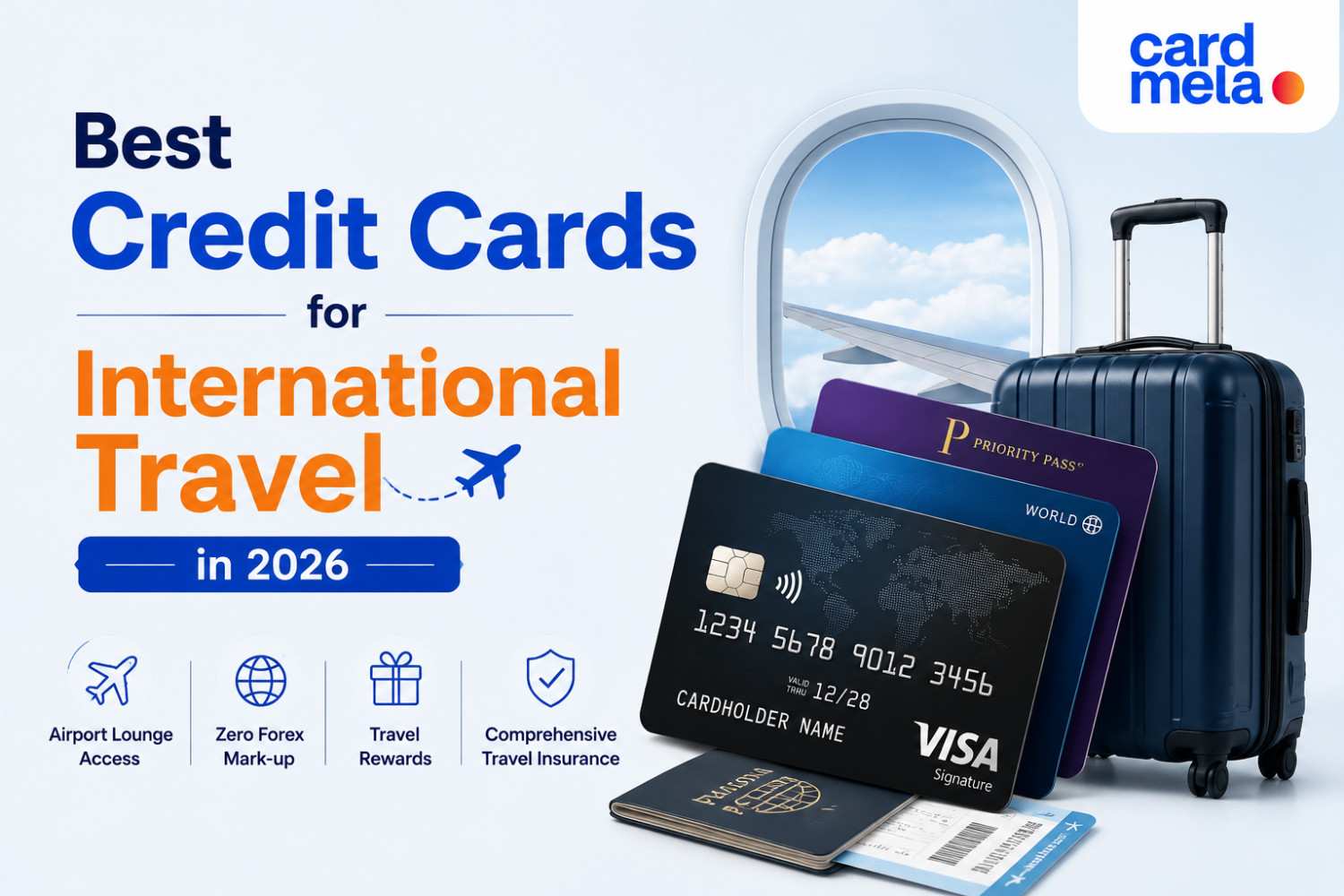
Top 10 Best Credit Cards for International Travel in 2026
Table of Contents
Top 10 Best Credit Cards for International Travel in 2026
Introduction
International travel from India is growing faster than ever in 2026. Indian consumers are now traveling abroad not only for vacations, but also for education, business expansion, remote work, luxury experiences, destination weddings, and global tourism opportunities.
As global travel becomes more digitally connected, financially smart travelers are increasingly depending on travel-focused credit cards instead of cash or debit cards.
Modern international travel credit cards provide much more than payment convenience. They help consumers save money, earn travel rewards, reduce forex charges, access airport lounges, receive complimentary insurance, and enjoy premium lifestyle experiences worldwide.
Banks like HDFC Bank, Axis Bank, ICICI Bank, American Express, and SBI Card are aggressively competing in the global travel rewards segment.
International travel expenses can quickly become expensive because of:
- Forex markup fees
- Hotel expenses
- Flight costs
- Airport spending
- Shopping transactions
- Lounge charges
- Travel insurance costs
- International ATM fees
The right travel credit card can significantly reduce these costs while improving the overall travel experience.
At the same time, fintech innovation and digital banking systems are transforming how Indian travelers manage global spending.
Consumers now expect:
- App-based travel management
- Real-time expense tracking
- Instant reward redemption
- AI-driven travel recommendations
- Contactless international payments
- Multi-currency convenience
Understanding which credit cards perform best for international travel in 2026 can help Indian consumers maximize savings, convenience, and premium benefits globally.
Why International Travel Cards Are Becoming Essential
Global travel has become deeply connected with digital payment systems and reward ecosystems.
Carrying large amounts of cash while traveling internationally is increasingly risky and inconvenient.
International travel cards provide:
- Safer transactions
- Better currency conversion
- Reward optimization
- Emergency support
- Global acceptance
- Expense tracking convenience
Premium travelers additionally benefit from luxury privileges that improve comfort and reduce travel stress.
Young professionals and digital nomads especially prefer travel cards because they integrate smoothly with mobile banking apps and international ecommerce ecosystems.
Table: Major Benefits of International Travel Credit Cards
| Feature | Benefit |
|---|---|
| Airport lounge access | Premium travel comfort |
| Low forex markup | International savings |
| Reward points | Future travel discounts |
| Travel insurance | Emergency protection |
| Concierge services | Convenience support |
Table: Most Common International Travel Expenses
| Expense Type | Spending Trend |
|---|---|
| Flight bookings | Very high |
| Hotel stays | High |
| Dining abroad | Growing rapidly |
| Shopping | High |
| Local transportation | Frequent |
Best Credit Cards for International Travel in 2026
Axis Bank Atlas Credit Card
Axis Atlas has emerged as one of India’s strongest travel rewards cards with powerful airline and hotel transfer partnerships, excellent milestone benefits, and strong international travel value.
HDFC Bank Infinia Credit Card
HDFC Infinia is considered one of India’s most premium travel cards, offering unlimited lounge access, SmartBuy travel optimization, concierge services, and premium global privileges.
American Express Platinum Travel Credit Card
Amex Platinum Travel remains highly popular among international travelers because of milestone rewards, luxury travel experiences, and premium hotel partnerships.
ICICI Bank Emeralde Credit Card
ICICI Emeralde combines luxury travel services, international acceptance, lounge access, and premium reward systems for affluent travelers.
YES BANK Marquee Credit Card
YES BANK Marquee has gained attention for premium reward rates, airport privileges, and strong travel spending benefits.
AU Zenith+ Credit Card
AU Zenith+ appeals strongly to modern travelers looking for digital-first experiences and premium international privileges.
RBL World Safari Credit Card
One of the strongest zero forex markup cards in India for travelers seeking lower international transaction costs.
Table: Best Cards by International Traveler Type
| Traveler Type | Recommended Card |
|---|---|
| Luxury travelers | HDFC Infinia |
| Budget global travelers | RBL World Safari |
| Reward maximizers | Axis Atlas |
| Frequent flyers | Amex Platinum Travel |
| Young professionals | AU Zenith+ |
Benefits of International Travel Credit Cards
International travel cards improve both financial efficiency and travel convenience.
One of the biggest benefits is forex savings. Many travel cards reduce or eliminate foreign exchange markup fees that usually increase overseas transaction costs.
Airport lounge access is another highly valuable feature because international journeys often involve long layovers and transit waiting periods.
Travel insurance coverage also helps travelers manage medical emergencies, baggage loss, delayed flights, and travel disruptions.
Reward systems allow consumers to convert regular travel spending into future travel discounts, hotel stays, or flight redemptions.
Premium cards additionally offer concierge services, golf access, hotel memberships, dining privileges, and exclusive travel partnerships.
Explanation
International travel spending differs significantly from domestic spending because of currency conversion systems and global payment networks.
Cards operating on Visa, Mastercard, and American Express networks provide global transaction support.
When travelers swipe cards abroad, transactions convert automatically into Indian rupees after applying forex exchange rates and processing fees.
Premium travel cards reduce these charges while adding reward acceleration systems for overseas spending.
Modern fintech ecosystems additionally allow consumers to monitor international expenses instantly through mobile banking apps.
Uses of International Travel Credit Cards
Consumers use international travel cards for multiple purposes including:
- Flight ticket bookings
- Hotel reservations
- International dining
- Luxury shopping
- Airport lounge access
- Global ecommerce transactions
- Business travel spending
- Emergency international expenses
Students studying abroad also increasingly use international cards because they simplify fee payments and overseas spending management.
Digital nomads and remote workers especially benefit from cards offering global acceptance and low forex charges.
Tips to Maximize International Travel Card Benefits
Consumers should prioritize cards with low forex markup charges because international transaction fees can become expensive during long trips.
Travelers should additionally compare reward redemption systems carefully because some cards provide stronger airline and hotel transfer value than basic cashback structures.
Booking flights and hotels through partner portals often generates accelerated rewards and bonus points.
Users should always inform banks before international travel to reduce transaction blocking risks caused by fraud detection systems.
Maintaining financial discipline remains essential because luxury travel rewards can sometimes encourage unnecessary spending behavior.
Consumers should also monitor dynamic currency conversion traps while paying internationally. Choosing local currency payments is often more economical than merchant currency conversion systems.
Table: Smart International Travel Card Tips
| Strategy | Benefit |
|---|---|
| Use low forex cards | Lower overseas cost |
| Book through travel portals | Extra rewards |
| Choose local currency payment | Better exchange rate |
| Track spending via apps | Budget control |
Table: Common International Travel Mistakes
| Mistake | Financial Impact |
|---|---|
| Ignoring forex fees | Higher expenses |
| Paying only minimum due | Debt accumulation |
| Dynamic currency conversion | Poor exchange rates |
| Overspending for rewards | Financial pressure |
How Fintech Is Changing International Travel Spending
India’s digital financial ecosystem is transforming global travel experiences rapidly.
Consumers increasingly rely on:
- AI-powered travel planning
- App-based forex management
- Contactless international payments
- UPI-linked global systems
- Digital travel wallets
- Integrated reward ecosystems
Organizations like National Payments Corporation of India continue working toward expanding India’s international digital payment infrastructure.
Banks and fintech companies are additionally using AI-driven analytics to personalize travel rewards, spending recommendations, and premium offers.
Experts believe future travel cards will become increasingly integrated with real-time AI financial assistants and global digital identity systems.
Table: Future Trends in International Travel Payments
| Trend | Expected Impact |
|---|---|
| AI travel optimization | Personalized planning |
| Digital forex systems | Faster currency management |
| Contactless travel payments | Greater convenience |
| Smart reward ecosystems | Better loyalty programs |
Internal Linking
- Best Airport Lounge Access Credit Cards
- Best Forex Credit Cards for Travelers
- Travel EMI vs Personal Loan Explained
- Smart Ways to Save Money While Traveling
- Credit Cards That Work Best with Google Pay & PhonePe
- How Reward Points Really Work
- Best Premium Credit Cards in India
- International Shopping with Credit Cards Explained
- Best Credit Cards for Summer Holiday Bookings
- How to Avoid Forex Charges While Traveling
External Linking
Conclusion
International travel credit cards have become essential financial tools for Indian travelers in 2026.
From reducing forex charges and improving airport experiences to generating travel rewards and emergency protection, premium travel cards significantly enhance global travel convenience.
However, the smartest travelers understand that rewards are valuable only when combined with disciplined financial behavior.
Consumers who choose cards strategically, repay balances responsibly, optimize rewards intelligently, and avoid emotional spending usually gain the maximum long-term value from travel credit ecosystems.
As India’s international travel economy continues expanding rapidly, competition among banks and fintech companies is expected to create even more innovative travel-focused reward systems in the coming years.
FAQs (Frequently Asked Questions)
How can beginners select the right international travel card without getting confused by marketing?
Beginners should focus first on actual travel habits rather than advertisements. Travelers who frequently fly internationally may prioritize lounge access and airline rewards, while budget travelers should focus more on low forex fees and cashback systems. Choosing cards based on real spending behavior usually creates better long-term value.
Why do luxury travelers prefer premium travel cards instead of basic cards?
Luxury cards provide exclusive benefits such as concierge services, unlimited lounge access, premium hotel memberships, golf privileges, travel insurance, and personalized support systems that improve convenience and comfort significantly during international travel.
Can international travel cards help save money even for budget travelers?
Yes. Budget travelers benefit greatly from low forex charges, reward points, flight discounts, and cashback systems. Small percentage savings on multiple transactions abroad can create meaningful long-term financial benefits.
How is AI transforming international travel experiences?
AI systems now analyze customer preferences, booking history, spending patterns, and travel behavior to generate personalized flight suggestions, hotel recommendations, reward offers, and expense management insights.
What mistakes do first-time international travelers commonly make with credit cards?
Common mistakes include ignoring forex charges, paying only minimum dues, overspending for rewards, failing to notify banks before travel, and accepting poor dynamic currency conversion rates abroad.
Can reward-focused spending become financially dangerous?
Yes. Some consumers overspend unnecessarily just to earn reward points or luxury privileges. Smart travelers understand that rewards should support planned spending rather than encourage emotional purchases.
Why are global payment networks important for travelers?
Networks like Visa, Mastercard, and American Express ensure worldwide transaction acceptance, secure payment processing, fraud protection, and international merchant connectivity.
How does fintech improve safety for international card usage?
Modern fintech systems provide instant transaction alerts, app-based card controls, AI fraud monitoring, virtual card systems, and real-time expense tracking that improve security significantly.
Can international travel cards help improve credit scores too?
Yes. Responsible international spending combined with timely repayments contributes positively toward repayment history and overall credit profile stability.
What is the smartest long-term strategy for maximizing travel card value?
The smartest strategy combines low forex costs, disciplined repayment habits, strategic reward redemption, careful travel budgeting, and controlled spending behavior across international trips.
Author Bio
CardMela, a fast-growing platform dedicated to helping Indian consumers make smarter financial decisions. With years of experience in banking, fintech analysis, travel rewards, forex systems, and digital payments, he specializes in simplifying complex financial topics and helping users maximize savings through strategic credit card usage, reward optimization, and responsible financial planning in India.
Whether you’re looking for cashback, travel rewards, fuel savings, or lifetime free cards — CardMela helps you compare, analyze, and choose the credit card that fits your lifestyle perfectly. We partner with leading partners to bring you exclusive offers and detailed insights, so you can make smart financial decisions with confidence.
© 2025 CardMela.com. All rights reserved.
