
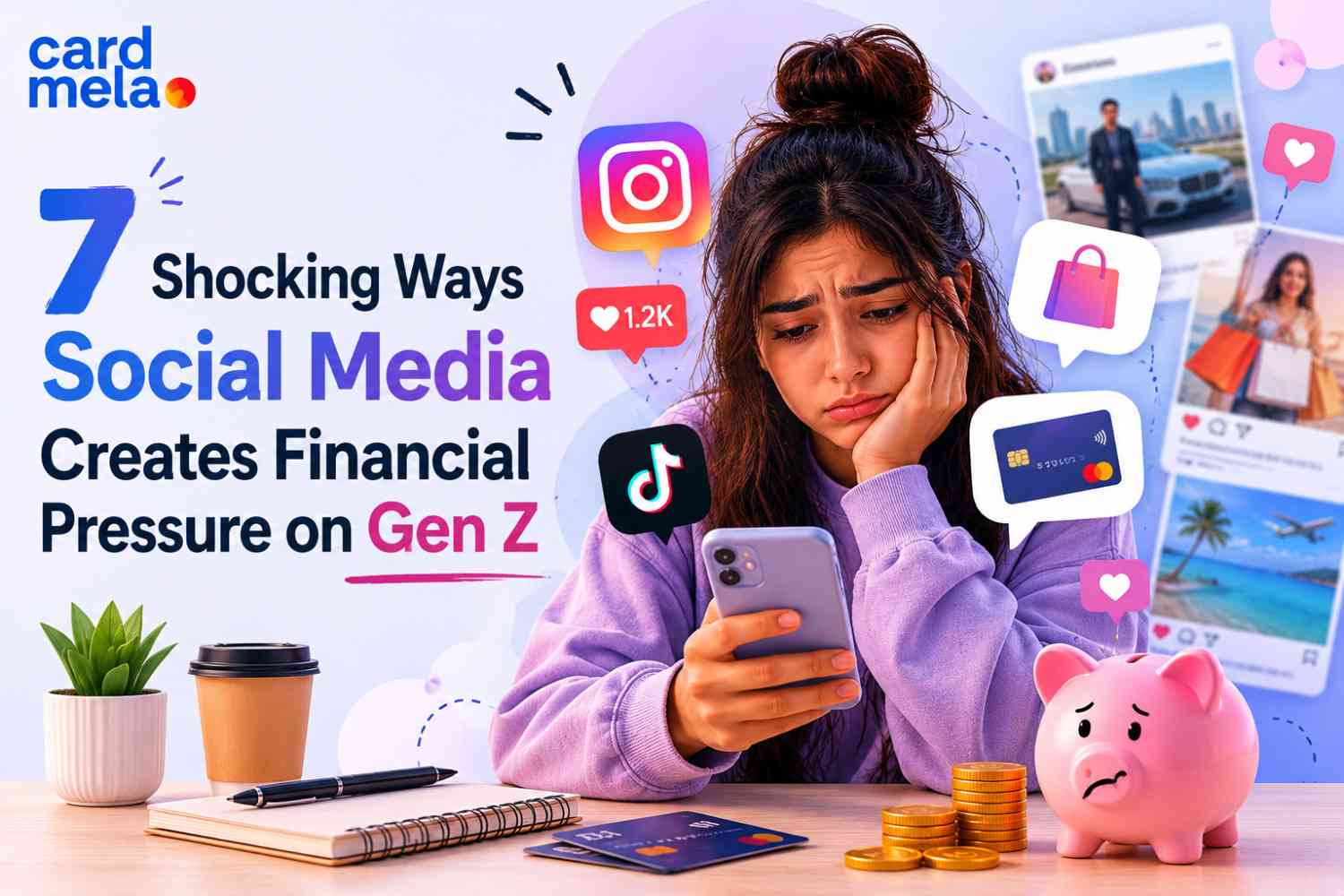
7 Shocking Ways Social Media Creates Financial Pressure on Gen Z
Table of Contents
7 Shocking Ways Social Media Creates Financial Pressure on Gen Z
Introduction
Social media has completely transformed how Gen Z thinks about money, lifestyle, success, and spending habits. Platforms such as Instagram, YouTube, Snapchat, and short-video apps continuously expose young users to luxury lifestyles, expensive gadgets, premium vacations, fashion trends, dining experiences, influencer marketing, and “perfect lifestyle” content every single day.
Unlike previous generations, Gen Z does not simply compare themselves to neighbors or relatives anymore. Today’s comparison culture is global and nonstop. A college student in India can instantly compare their lifestyle with influencers in Dubai, creators in the United States, luxury travelers in Europe, or successful entrepreneurs on social media.
This constant digital comparison creates invisible financial pressure.
Many young consumers now feel emotionally forced to spend money on:
- Smartphones
- Fashion brands
- Cafes and dining
- Premium subscriptions
- International travel
- Luxury sneakers
- Fitness memberships
- Gadgets
- Cosmetic products
- Online shopping
simply to “fit in” socially online.
Social media is no longer just entertainment.
It has become a psychological spending engine.
This is one of the biggest reasons why:
- Credit-card usage among Gen Z is increasing
- EMI culture is expanding rapidly
- Buy Now Pay Later systems are growing
- Cashback addiction is rising
- Digital-payment frequency is exploding
Financial institutions, fintech companies, ecommerce platforms, and influencers all understand one important reality:
Attention creates spending.
And spending creates profit.
Why Social Media Impacts Financial Behavior So Strongly
Social media platforms are designed to maximize emotional engagement.
Users constantly see:
- Luxury vacations
- Expensive cafes
- Premium gadgets
- Designer fashion
- Viral shopping hauls
- Influencer lifestyles
- “Perfect” success stories
This creates psychological comparison pressure.
Many Gen Z users unconsciously feel:
- “Everyone is earning more than me.”
- “Everyone is traveling except me.”
- “Everyone owns better gadgets.”
- “Everyone looks financially successful.”
In reality, much of social-media lifestyle content is carefully curated, sponsored, filtered, or financially unsustainable.
But emotionally, it feels real.
That emotional pressure drives spending behavior.
Table: Traditional Spending Psychology vs Social-Media Spending Psychology
| Traditional Financial Thinking | Social-Media Financial Thinking |
|---|---|
| Spend based on needs | Spend based on trends |
| Save before luxury | Show lifestyle quickly |
| Delayed gratification | Instant gratification |
| Budget-focused mindset | Experience-focused mindset |
How Influencer Culture Encourages Overspending
Influencer marketing has become one of the most powerful financial forces affecting Gen Z consumers.
Influencers promote:
- Luxury gadgets
- Fashion brands
- International travel
- Premium cafes
- Credit-card offers
- Buy Now Pay Later apps
- Subscription lifestyles
Most consumers do not realize how aggressively social-media algorithms encourage aspirational spending.
When users repeatedly watch luxury-oriented content, platforms show even more luxury-oriented content.
This creates a continuous financial aspiration loop.
Eventually many consumers begin spending emotionally instead of rationally.
Why Credit Cards Are Becoming Popular Among Gen Z
Gen Z consumers increasingly prefer digital financial systems because they offer:
- Instant convenience
- Cashback rewards
- EMI flexibility
- Reward points
- UPI compatibility
- Online shopping benefits
- Subscription management
Credit cards psychologically reduce the “pain of paying” because money does not leave immediately.
This is why many young users spend more through digital systems than through physical cash.
Best Credit Cards for Gen Z Digital Lifestyle Spending
SBI Cashback Credit Card
SBI Cashback Credit Card is highly attractive for Gen Z users because of its straightforward cashback structure across online spending categories. Young consumers heavily involved in ecommerce shopping, subscriptions, food delivery, and app-based transactions can benefit significantly from its simple rewards model. The card particularly appeals to digital-first users who prefer easy savings rather than complex reward-point systems.
Axis Bank ACE Credit Card
Axis ACE is extremely popular among app-based spenders because it performs strongly across utility bills, food delivery, and digital transactions. Young consumers who frequently use digital-payment ecosystems and lifestyle apps can maximize cashback efficiently through regular everyday spending.
HDFC Bank Millennia Credit Card
HDFC Millennia is specifically designed for younger online consumers who spend heavily on shopping, subscriptions, entertainment, and digital services. The card’s ecommerce-focused reward ecosystem aligns strongly with Gen Z’s modern spending patterns.
ICICI Bank Amazon Pay Credit Card
This card is ideal for consumers deeply involved in online shopping ecosystems. Gen Z users frequently purchasing gadgets, fashion products, and household items from ecommerce platforms can generate substantial cashback value over time.
Flipkart Axis Bank Credit Card
Flipkart Axis has become one of India’s most popular shopping-oriented cards because it targets younger digital shoppers aggressively. Consumers focused on fashion, electronics, accessories, and lifestyle shopping benefit heavily from its ecommerce cashback structure.
OneCard Credit Card
OneCard appeals strongly to Gen Z users because of its modern app interface, spending analytics, digital-first design, and sleek metal-card branding. The card reflects how younger consumers increasingly value financial products that combine technology, design, and lifestyle identity.
Table: Most Common Gen Z Spending Categories
| Spending Category | Popularity Among Gen Z |
|---|---|
| Food delivery | Extremely High |
| Online shopping | Very High |
| Streaming subscriptions | High |
| Gadgets & electronics | Rapidly Growing |
| Fashion & sneakers | Very High |
How Social Media Creates Fake Financial Competition
One of the biggest financial dangers for Gen Z is invisible competition.
Many users feel pressure to:
- Upgrade phones regularly
- Travel frequently
- Wear branded fashion
- Eat at trendy cafes
- Buy premium gadgets
- Maintain social-media appearances
This creates lifestyle inflation.
Lifestyle inflation means expenses rise faster than income growth.
Many young professionals earning decent salaries still struggle financially because their spending increases continuously to match online social expectations.
The Rise of EMI Lifestyle Culture
Social media has normalized EMI-based consumption.
Consumers now buy:
- iPhones
- Laptops
- Bikes
- Fashion products
- Travel packages
- Furniture
through easy monthly payments.
While EMIs can provide flexibility, excessive EMI dependency reduces future financial freedom.
Many Gen Z consumers unknowingly lock themselves into long-term payment cycles simply to maintain social-media-driven lifestyles.
Table: Smart EMI Usage vs Dangerous EMI Usage
| Smart EMI Usage | Dangerous EMI Usage |
|---|---|
| Emergency purchases | Impulsive luxury shopping |
| Affordable repayment | Multiple active EMIs |
| Planned spending | Emotional spending |
| Budget-controlled | Income-stretching lifestyle |
Benefits of Social Media Financial Awareness
Social media is not entirely negative.
It also provides financial advantages such as:
- Financial education content
- Investment awareness
- Credit-score education
- Budgeting tips
- Career guidance
- Side-income ideas
- Entrepreneurship inspiration
- Digital-business opportunities
Many Gen Z users learn about investing, SIPs, mutual funds, and credit management through financial creators online.
The key difference is:
Educational content helps financial growth.
Lifestyle comparison creates financial pressure.
Uses of Credit Cards for Responsible Young Consumers
When used responsibly, credit cards can help Gen Z consumers:
- Build credit history
- Track expenses digitally
- Earn cashback
- Access emergency liquidity
- Improve financial discipline
- Earn travel rewards
- Improve future loan eligibility
The problem is not credit cards themselves.
The problem is emotionally driven spending behavior.
Why Cashback Culture Feels Addictive
Modern fintech systems use behavioral psychology very aggressively.
Consumers feel emotionally rewarded when they:
- Earn cashback
- Unlock rewards
- Complete spending milestones
- Receive instant coupons
- View savings notifications
This creates dopamine-driven spending behavior similar to gaming systems.
Many users spend unnecessarily simply because “offers are available.”
Table: Cashback Psychology vs Actual Financial Reality
| Cashback Feeling | Actual Reality |
|---|---|
| “I saved money” | Money was still spent |
| “Great deal” | Often unnecessary purchase |
| “Reward achieved” | Spending increased |
| “Discount won” | Budget affected |
Smart Financial Tips for Gen Z Consumers
Young consumers should build healthier financial habits early.
Important tips include:
- Follow budgeting systems
- Avoid emotional shopping
- Limit unnecessary EMIs
- Track subscriptions regularly
- Spend below income level
- Build emergency savings
- Avoid influencer-driven spending pressure
- Use cashback intelligently
- Focus on long-term wealth building
The strongest financial flex is not luxury spending.
It is financial stability.
Why Financial Anxiety Is Rising Among Gen Z
Despite appearing digitally connected, many Gen Z users experience increasing financial stress.
Major reasons include:
- Rising lifestyle expectations
- Job uncertainty
- Social comparison
- Expensive urban living
- Pressure to appear successful
- Fear of missing out (FOMO)
- Digital spending addiction
Social media often amplifies these anxieties continuously.
The Future of Gen Z Spending Culture
Experts believe Gen Z may eventually split into two groups:
Group 1:
Consumers trapped in:
- EMI cycles
- Lifestyle inflation
- Impulsive spending
- Social-media comparison
Group 2:
Consumers focused on:
- Investing
- Financial independence
- Digital entrepreneurship
- Smart budgeting
- Long-term wealth creation
The difference will largely depend on financial awareness and emotional discipline.
Internal Linking
- How to Build a Strong Credit Score by Swiping Your Credit Card
- UPI Credit Cards Becoming India’s Next Big Payment Trend
- Why Banks Want More Customers Using Digital Payments
- Credit Cards That Work Best with Google Pay & PhonePe
- Best Cashback Credit Cards in India
- Food Delivery Cashback Offers in May 2026
- Hidden Charges Most Credit Card Users Ignore
External Linking
- YouTube
- Google Pay India
- PhonePe
- Amazon India
- Flipkart
- Swiggy
- Zomato
- Reserve Bank of India
- NPCI India
Conclusion
Social media has become one of the strongest financial influences shaping Gen Z spending behavior in modern India.
Platforms designed for entertainment now heavily influence:
- Spending psychology
- Lifestyle expectations
- Financial habits
- Credit-card usage
- Ecommerce behavior
- EMI culture
While digital platforms provide opportunities for learning, entrepreneurship, and financial awareness, they also create constant pressure to appear financially successful online.
Many consumers unknowingly spend money trying to maintain digital lifestyles that are unrealistic or financially unsustainable.
The most important financial lesson for Gen Z is simple:
Wealth is not about looking rich online.
Real financial strength comes from:
- Discipline
- Savings
- Investing
- Smart spending
- Controlled debt
- Long-term thinking
Because social-media likes disappear quickly…
…but financial mistakes can remain for years.
FAQs (Frequently Asked Questions )
Why does social media create financial pressure on Gen Z?
Social media continuously exposes users to luxury lifestyles, travel content, expensive gadgets, and influencer-driven spending habits. This creates comparison pressure where many users feel emotionally forced to spend money just to match perceived social standards online.
How do influencers affect spending behavior?
Influencers often promote aspirational lifestyles, premium products, fashion trends, travel experiences, and shopping culture. Repeated exposure psychologically encourages consumers to spend more frequently and emotionally.
Why are Gen Z consumers using credit cards more aggressively?
Gen Z consumers prefer convenience, cashback systems, online shopping rewards, and digital-payment ecosystems. Credit cards integrate naturally into app-based lifestyles and ecommerce behavior.
Can social media increase debt problems?
Yes. Excessive lifestyle comparison, impulsive shopping, and EMI-based spending can gradually create long-term debt pressure, especially among young consumers trying to maintain expensive lifestyles online.
Why does cashback culture feel addictive?
Cashback systems trigger emotional reward psychology. Consumers feel they are “earning money” while spending, which encourages more transactions and higher app engagement.
Are EMIs dangerous for young consumers?
EMIs are not automatically dangerous, but excessive EMI dependency can reduce financial flexibility and create long-term repayment stress if spending becomes uncontrolled.
Can social media also improve financial awareness?
Yes. Many creators share useful content about investing, budgeting, SIPs, entrepreneurship, and credit management. Educational financial content can positively influence younger consumers.
Why do many Gen Z consumers feel financially stressed despite earning?
Lifestyle inflation, social comparison, rising urban expenses, subscription culture, and digital spending habits often increase expenses faster than income growth.
What is the smartest financial habit Gen Z can build early?
The smartest habit is controlled spending combined with long-term investing and emergency savings. Financial discipline matters more than social-media appearance.
What is the funniest reality about social-media-driven spending culture?
Many people buy coffee worth ₹400 mainly to upload a ₹0 Instagram story proving they are “living their best life.”
Author Bio
The founder and content strategist behind CardMela is a passionate financial content creator focused on simplifying credit cards, digital banking, cashback systems, UPI innovations, and personal finance for Indian consumers. With extensive experience analyzing banking trends and fintech developments, CardMela has become a trusted platform for readers looking to make smarter financial decisions in India’s rapidly evolving digital economy.
The platform regularly covers topics such as credit card rewards, cashback offers, spend-based campaigns, travel benefits, fuel savings, digital-payment security, and modern banking technologies. Its content is designed to help consumers maximize value from everyday spending while avoiding common financial mistakes like hidden charges, debt traps, impulsive EMI usage, and fraud risks.
CardMela strongly focuses on practical financial awareness by publishing easy-to-understand guides, detailed card comparisons, banking explainers, and consumer-focused tips that simplify complex financial products for both beginners and experienced users.
Whether you’re looking for cashback, travel rewards, fuel savings, or lifetime free cards — CardMela helps you compare, analyze, and choose the credit card that fits your lifestyle perfectly. We partner with leading partners to bring you exclusive offers and detailed insights, so you can make smart financial decisions with confidence.
© 2025 CardMela.com. All rights reserved.
