
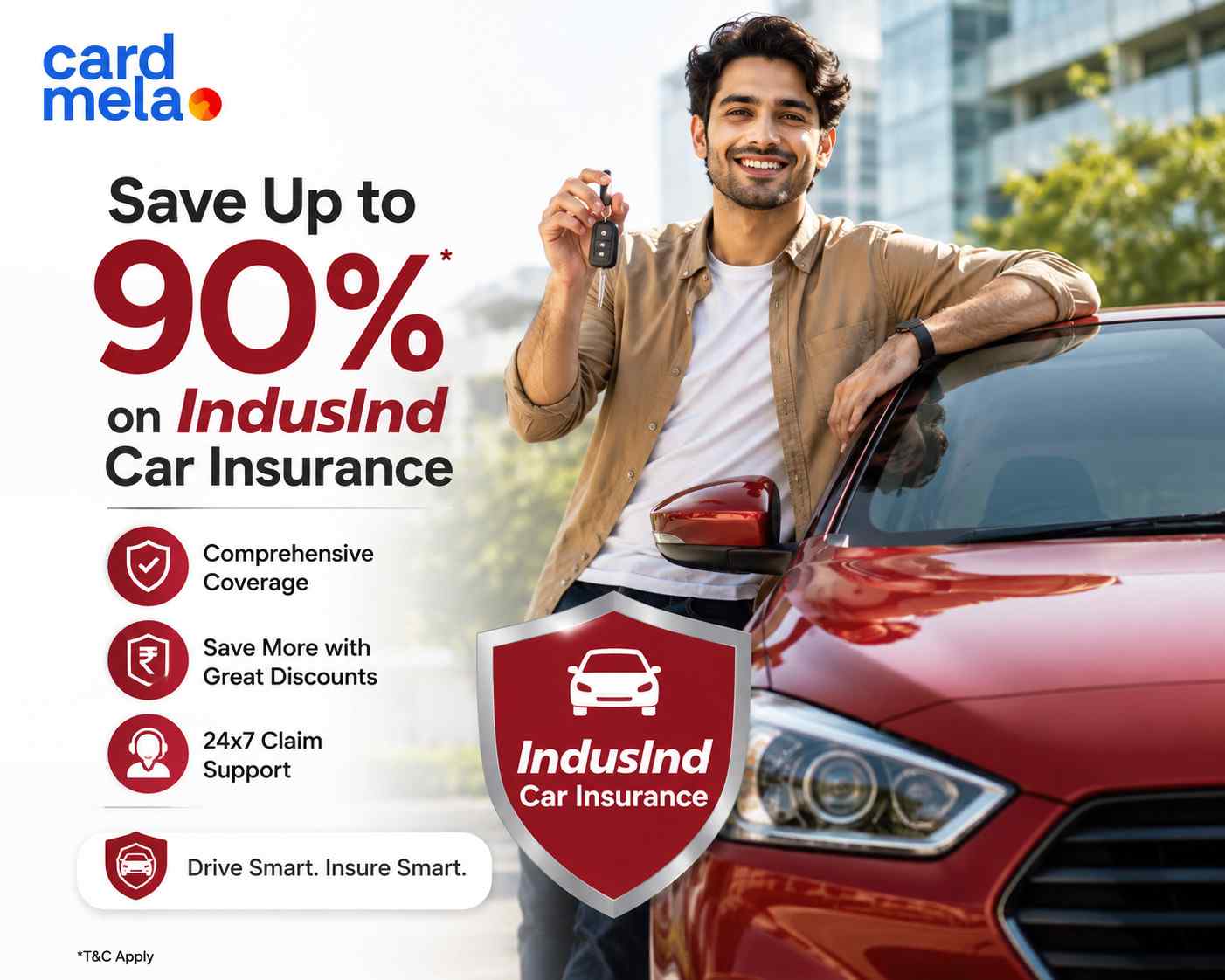
Save Up to 90% on IndusInd Car Insurance: Complete Guide to Lower Premiums in 2026
Table of Contents
Save Up to 90% on IndusInd Car Insurance: Complete Guide to Lower Premiums in 2026
Introduction
Car insurance has become an essential financial product for every vehicle owner in India. Rising repair costs, increasing road accidents, expensive spare parts, and changing regulatory requirements have made vehicle protection more important than ever before. At the same time, consumers are becoming more price-conscious and actively searching for ways to reduce insurance expenses without compromising coverage.
Recently, offers promoting savings of up to 90% on IndusInd Car Insurance have attracted significant attention among vehicle owners. Such offers naturally raise questions: How are these savings calculated? Are they genuine? Who qualifies for these discounts? And most importantly, how can consumers maximize savings while maintaining strong protection for their vehicles?
In today’s digital insurance market, comparing policies has become easier than ever. Customers can evaluate multiple insurers, customize coverage, add optional benefits, and purchase policies online within minutes. This increased competition has resulted in better pricing, improved customer service, and greater transparency for policyholders.
However, buying car insurance is no longer just about finding the lowest premium. Smart consumers evaluate claim settlement processes, coverage quality, add-on benefits, roadside assistance, cashless garage networks, and long-term value before making a decision.
Understanding how insurance pricing works can help vehicle owners save thousands of rupees every year while maintaining comprehensive protection against accidents, theft, natural disasters, fire, and third-party liabilities.
This guide explains everything you need to know about IndusInd Car Insurance savings opportunities, premium reduction strategies, policy features, benefits, common mistakes, and smart financial practices that can help you protect both your vehicle and your wallet.
Understanding Car Insurance in India
Car insurance serves as a financial safety net that protects vehicle owners against unexpected losses arising from accidents, theft, fire, natural disasters, and third-party liabilities. Under Indian law, every vehicle operating on public roads must have at least third-party insurance coverage.
While third-party insurance satisfies legal requirements, it provides limited protection because it does not cover damages to the insured vehicle itself. This is why most consumers today prefer comprehensive insurance plans that offer broader protection.
A comprehensive car insurance policy typically covers:
- Accidental damage
- Theft protection
- Fire damage
- Flood damage
- Storm-related losses
- Third-party liabilities
- Personal accident cover
- Cashless repair facilities
Modern insurers have expanded coverage options significantly, allowing customers to customize protection according to their needs.
Why IndusInd Car Insurance Is Gaining Popularity
IndusInd’s insurance offerings are becoming increasingly attractive because consumers today want convenience, digital access, competitive pricing, and flexible coverage options.
Key reasons include:
- Online policy issuance
- Competitive premium rates
- Quick policy comparison
- Add-on customization
- Cashless claim facilities
- Digital renewal process
- Customer support integration
Consumers can compare multiple plans and select coverage that matches both their budget and protection requirements.
Table: Key Features of Car Insurance
| Feature | Benefit |
|---|---|
| Third-Party Cover | Legal compliance |
| Own Damage Cover | Vehicle protection |
| Theft Protection | Financial security |
| Natural Disaster Cover | Risk management |
| Cashless Repairs | Convenient claims |
| Roadside Assistance | Emergency support |
| Personal Accident Cover | Driver protection |
How Can Customers Save Up to 90%?
The phrase “save up to 90%” generally refers to potential savings achieved through:
- Comparing multiple insurers
- No Claim Bonus accumulation
- Safe driving history
- Online discounts
- Policy customization
- Selecting appropriate IDV
- Loyalty benefits
- Renewal discounts
The actual savings vary significantly from customer to customer.
For example, a driver with five consecutive claim-free years may enjoy substantial No Claim Bonus discounts compared to someone filing claims regularly.
Similarly, choosing only relevant add-ons instead of unnecessary coverage options can significantly reduce premiums.
Benefits of Car Insurance
Car insurance delivers benefits that extend far beyond legal compliance.
A quality policy provides:
- Financial stability during accidents
- Protection from large repair bills
- Peace of mind while driving
- Faster vehicle restoration
- Theft compensation
- Third-party liability protection
- Emergency roadside support
Without adequate insurance coverage, a single major accident can create significant financial stress.
Uses of Car Insurance in Daily Life
Most people purchase insurance because it is mandatory. However, insurance plays a much larger role in personal financial planning.
It helps:
- Protect savings
- Avoid emergency borrowing
- Preserve household budgets
- Manage unforeseen expenses
- Support vehicle ownership costs
- Reduce financial uncertainty
For many families, insurance acts as a financial shock absorber during unexpected situations.
Recommended Credit Cards for Insurance Premium Payments
SBI SimplyCLICK Credit Card
The SBI SimplyCLICK Credit Card is an excellent option for policyholders who prefer making insurance premium payments online. Apart from earning rewards on digital transactions, the card offers benefits across ecommerce platforms and utility payments. Users who pay annual insurance premiums can accumulate valuable reward points while maintaining regular spending discipline.
HSBC Live+ Credit Card
The HSBC Live+ Credit Card is becoming increasingly popular among consumers seeking lifestyle rewards alongside everyday spending benefits. While insurance payments may not always generate maximum rewards, the card provides strong overall value through cashback opportunities and spending-based offers, making it suitable for users looking to optimize annual premium payments.
YES Bank Marquee Credit Card
The YES Bank Marquee Credit Card is targeted toward premium users who frequently make large-value transactions. Insurance premium payments, travel bookings, and lifestyle expenses can help cardholders unlock enhanced rewards and milestone benefits. This card suits professionals looking for premium financial products with comprehensive benefits.
Standard Chartered Ultimate Credit Card
For consumers paying high-value insurance premiums, the Standard Chartered Ultimate Credit Card offers strong reward potential. The card is particularly beneficial for users who combine insurance payments with travel, dining, and premium lifestyle spending throughout the year.
Bank of Baroda Eterna Credit Card
The Bank of Baroda Eterna Credit Card provides a balanced mix of rewards, lifestyle benefits, and spending flexibility. Insurance premium payments can contribute toward annual spending milestones while helping users earn reward points across multiple spending categories.
Comparison Table: Car Insurance Saving Factors
| Factor | Impact on Premium |
|---|---|
| No Claim Bonus | Very High Savings |
| Vehicle Age | Moderate Impact |
| Add-On Covers | Premium Increase |
| Insured Declared Value | Significant Impact |
| Driver History | High Impact |
| Location | Moderate Impact |
| Anti-Theft Devices | Premium Reduction |
| Policy Renewal Timing | Potential Savings |
Comparison Table: Comprehensive vs Third-Party Insurance
| Feature | Comprehensive | Third Party |
|---|---|---|
| Own Vehicle Damage | Yes | No |
| Third Party Liability | Yes | Yes |
| Theft Coverage | Yes | No |
| Natural Disaster Coverage | Yes | No |
| Premium Cost | Higher | Lower |
| Financial Protection | Better | Limited |
Table: Factors Affecting Car Insurance Premium
| Factor | Impact on Premium |
|---|---|
| Vehicle Age | Older vehicles may have lower IDV but higher risk factors |
| Car Model | Premium cars generally attract higher premiums |
| Location | Metro cities often have higher premiums |
| No Claim Bonus (NCB) | Reduces premium significantly |
| Add-On Covers | Increases premium |
| Driving History | Safer drivers may get better rates |
| Insured Declared Value (IDV) | Higher IDV means higher premium |
| Claim History | Frequent claims can increase premium |
Tips to Save More on IndusInd Car Insurance
Saving money on car insurance is not just about finding the cheapest policy. The smartest approach is to balance affordability with adequate protection. Consumers should always compare multiple plans before purchasing a policy and review the coverage details carefully. A policy with a slightly higher premium may offer significantly better protection and claim support.
One of the most effective ways to reduce premiums is by maintaining a strong No Claim Bonus (NCB). Avoid filing small claims whenever possible, as preserving your NCB can result in substantial savings over several years. Safe driving habits not only reduce accident risks but also help maintain lower insurance costs in the long run.
Vehicle owners should review add-on covers carefully. While features such as Zero Depreciation Cover, Roadside Assistance, and Engine Protection can provide excellent value, unnecessary add-ons may increase premiums without delivering meaningful benefits. Select only those add-ons that match your driving habits and vehicle usage.
Renewing your policy before its expiry date is another important strategy. Timely renewals help prevent policy lapses, preserve accumulated NCB benefits, and eliminate the need for vehicle inspections that may be required after a lapse.
Consumers should also ensure that their vehicle’s Insured Declared Value (IDV) is realistic. An excessively high IDV increases premiums, while an excessively low IDV can reduce claim payouts. Finding the right balance helps maximize value.
Paying insurance premiums through reward-focused credit cards can provide additional savings through cashback, reward points, milestone benefits, and promotional offers. This allows consumers to earn extra value from a mandatory annual expense.
Finally, always read policy exclusions carefully. Understanding what is not covered is just as important as understanding what is covered. This prevents surprises during the claim process and helps policyholders make informed decisions.
Conclusion
Car insurance has evolved from a simple legal requirement into an essential financial protection tool for modern vehicle owners. Rising repair costs, expensive spare parts, increasing traffic density, and unpredictable road conditions make comprehensive insurance coverage more important than ever before.
Offers claiming savings of up to 90% on IndusInd Car Insurance highlight the growing competition within India’s insurance market. While actual savings vary depending on factors such as driving history, No Claim Bonus eligibility, vehicle type, and selected coverage, consumers can significantly reduce their insurance expenses by comparing policies, choosing appropriate add-ons, and maintaining safe driving habits.
The most successful insurance buyers focus on value rather than just price. A well-designed policy provides peace of mind, financial security, and protection against unexpected losses that could otherwise create significant financial stress. Whether it is an accident, theft, natural disaster, or third-party liability claim, the right insurance coverage acts as a critical financial safeguard.
Consumers should also leverage digital tools, online policy comparisons, and reward-based credit cards to maximize overall savings. Combining smart insurance decisions with responsible financial planning can help reduce long-term ownership costs while ensuring adequate protection.
Ultimately, the goal is not simply to buy cheaper insurance—it is to secure the best possible protection at the most reasonable cost. By understanding policy features, maintaining claim-free driving records, selecting useful add-ons, and renewing policies on time, vehicle owners can enjoy both financial savings and greater confidence on the road.
A smart driver does not just protect their vehicle. They protect their finances as well.
Internal Linking
- Best Credit Cards for Fuel Savings in India
- Best Credit Cards for Road Trips & Fuel
- How Credit Card EMI Works
- How to Build a Strong Credit Score
- UPI Credit Cards Becoming India’s Next Big Payment Trend
- Best Travel Credit Cards in India 2026
- How Insurance Premium Payments Affect Personal Finance
External Linking
- IndusInd Bank Insurance Services
- Insurance Regulatory and Development Authority of India (IRDAI)
- General Insurance Council
- Ministry of Road Transport & Highways
- National Consumer Helpline
- Parivahan Sewa Portal
- FASTag Official Portal
- National Payments Corporation of India (NPCI)
- Reserve Bank of India (RBI)
- Policybazaar Car Insurance Guide
FAQs (Frequently Asked Questions )
Can I really save up to 90% on IndusInd Car Insurance?
The advertised savings of up to 90% are usually based on comparisons against higher-priced insurance plans available in the market. Actual savings depend on factors such as vehicle type, driving history, No Claim Bonus (NCB), policy coverage selected, location, and applicable discounts. While some customers may achieve substantial reductions, most policyholders should compare multiple plans carefully to understand realistic savings.
What is the No Claim Bonus and why is it important?
The No Claim Bonus (NCB) is one of the most valuable benefits in motor insurance. If a policyholder does not make any claims during a policy year, insurers reward them with a discount on the renewal premium. Over multiple claim-free years, this discount can become significant and dramatically reduce overall insurance costs.
Does choosing a lower premium always mean better savings?
Not necessarily. A lower premium may sometimes result from reduced coverage, fewer add-on protections, or lower insured value. Consumers should evaluate coverage quality, claim settlement support, and policy benefits instead of focusing only on premium price. The cheapest policy may not always provide adequate protection during emergencies.
Which add-on covers are most useful in car insurance?
Popular add-ons include Zero Depreciation Cover, Engine Protection Cover, Roadside Assistance, Return to Invoice Cover, and Consumables Cover. These add-ons can significantly improve claim payouts and reduce out-of-pocket expenses during accidents or vehicle breakdowns.
Can credit cards be used to pay car insurance premiums?
Yes. Most insurance providers allow policyholders to pay premiums using credit cards. This provides convenience, reward points, cashback opportunities, EMI options, and better transaction tracking. Choosing the right credit card can help maximize value from annual insurance payments.
How does vehicle age affect insurance premiums?
Older vehicles generally have lower insured values but may sometimes attract higher maintenance risks. Insurers consider depreciation, spare-part availability, repair costs, and claim probability while calculating premiums. As vehicles age, policy structures and coverage recommendations may change.
Is comprehensive insurance worth the extra cost?
For most vehicle owners, comprehensive insurance offers stronger protection because it covers both third-party liabilities and damages to the insured vehicle. It also protects against theft, natural disasters, fire, vandalism, and other risks that basic third-party insurance does not cover.
What happens if I delay my car insurance renewal?
Delaying renewal can lead to policy lapses, loss of accumulated No Claim Bonus benefits, legal penalties, and exposure to financial risks. Additionally, some insurers may require vehicle inspections before renewing a lapsed policy, creating further inconvenience.
How can I compare car insurance plans effectively?
Consumers should compare premium amounts, claim settlement ratios, customer reviews, coverage inclusions, exclusions, add-on options, and insurer reputation. Looking beyond headline discounts often leads to better long-term protection and satisfaction.
What is the biggest mistake people make while buying car insurance?
The most common mistake is selecting the cheapest available policy without understanding coverage limitations. Many consumers realize coverage gaps only after an accident or claim situation occurs. Proper comparison and understanding of policy terms remain essential for making informed decisions.
Author Bio
CardMela is a leading personal finance and credit card platform dedicated to helping Indian consumers make smarter financial decisions. Through detailed analysis of credit cards, banking products, insurance solutions, digital payment innovations, and consumer finance trends, CardMela provides practical insights that simplify complex financial topics.
Whether you’re looking for cashback, travel rewards, fuel savings, or lifetime free cards — CardMela helps you compare, analyze, and choose the credit card that fits your lifestyle perfectly. We partner with leading partners to bring you exclusive offers and detailed insights, so you can make smart financial decisions with confidence.
© 2025 CardMela.com. All rights reserved.
