
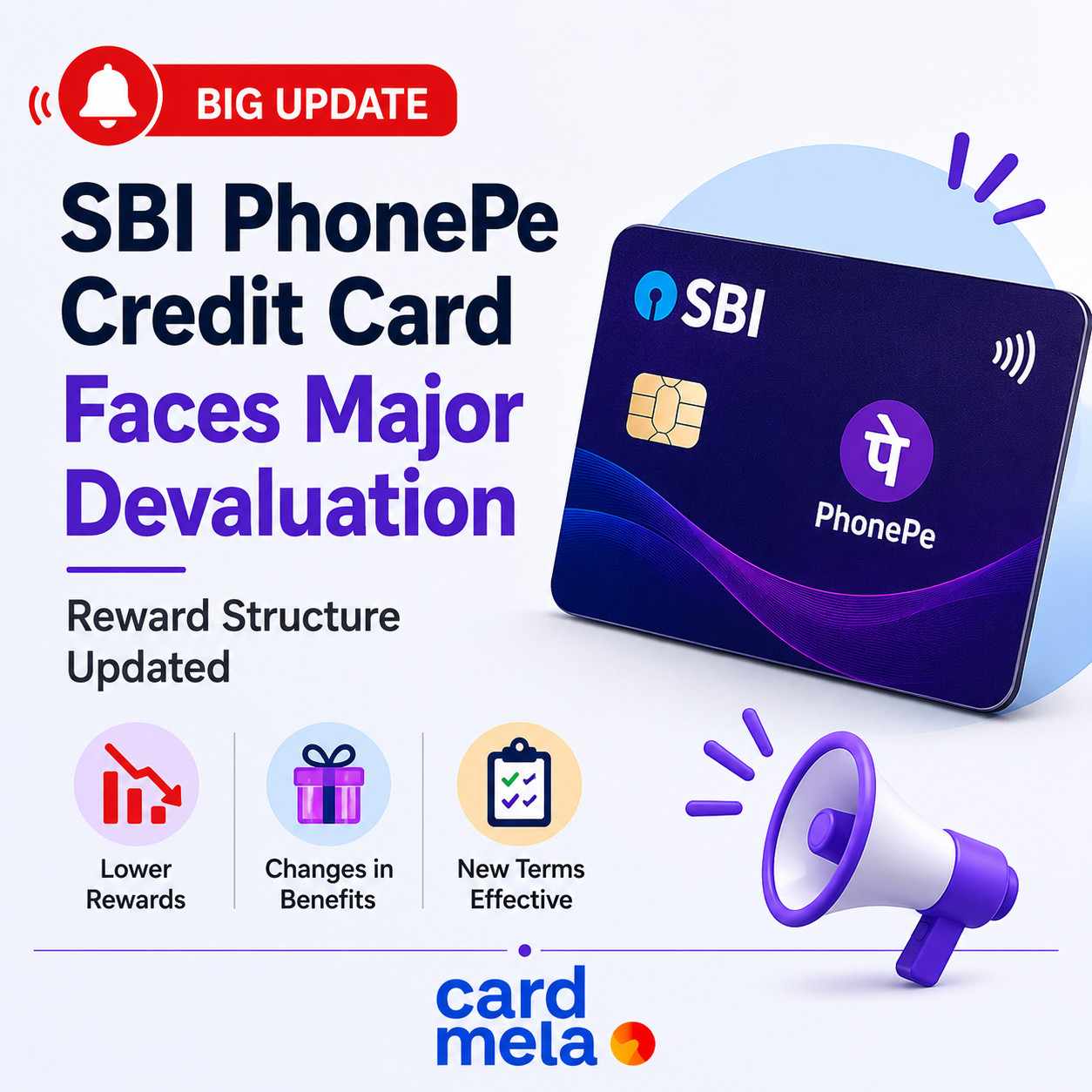
SBI PhonePe Credit Card Faces Major Devaluation: 5 Critical Reward Updates
Table of Contents
SBI PhonePe Credit Card Faces Major Devaluation: 5 Critical Reward Updates
Introduction
The Indian credit card industry has witnessed tremendous growth over the past few years, especially with the rise of UPI-based payments, cashback-focused cards, and co-branded financial products. Among these, the SBI Card PhonePe Credit Card quickly gained popularity because of its seamless integration with PhonePe, attractive cashback categories, and rewards-driven ecosystem.
However, recent updates to the SBI PhonePe Credit Card reward structure have sparked significant discussion among cardholders. Many users who originally applied for the card because of its rewarding cashback model are now reevaluating its value proposition after the latest devaluation announcement.
Credit card devaluation is not a new phenomenon. Banks periodically revise reward programs, spending categories, cashback rates, and redemption structures to align with profitability goals and changing consumer behavior. While these updates may seem disappointing initially, understanding the impact can help consumers make smarter decisions about their credit card portfolio.
This article explores the SBI PhonePe Credit Card devaluation in detail, explains how the revised reward structure affects users, compares alternative credit cards available in 2026, and provides practical strategies for maximizing rewards despite changing benefit structures.
What Does Credit Card Devaluation Mean?
Credit card devaluation occurs when a bank reduces the value of rewards, cashback, points, airline miles, or other benefits associated with a card. This can happen through lower reward rates, spending caps, category exclusions, increased redemption requirements, or stricter eligibility conditions.
For cardholders, devaluation effectively reduces the overall return they receive on their spending. While the card continues functioning normally, the rewards generated from transactions become less valuable than before.
Banks typically implement such changes to manage rising reward costs, changing market conditions, or shifts in customer spending patterns.
Why Banks Devalue Credit Card Rewards
Many consumers wonder why banks reduce rewards after successfully attracting customers. The answer lies in economics.
Credit card rewards cost money. Every cashback payment, reward point redemption, lounge visit, or promotional benefit impacts a bank’s profitability. As customer usage increases, reward expenses can grow rapidly.
Banks continuously analyze transaction patterns and adjust reward structures to maintain long-term sustainability. Popular spending categories such as UPI payments, online shopping, fuel, and bill payments often undergo revisions when reward costs become too high.
This is why consumers should view credit card rewards as dynamic rather than permanent features.
Table: Common Types of Credit Card Devaluation
| Type of Change | Impact on Users |
|---|---|
| Lower Cashback Rates | Reduced savings |
| Reward Point Reduction | Lower reward earnings |
| Spending Caps | Limited benefit potential |
| Category Exclusions | Fewer eligible transactions |
| Redemption Restrictions | Harder to use rewards |
| Lounge Access Changes | Reduced travel benefits |
| Fee Increases | Higher ownership costs |
SBI PhonePe Credit Card Reward Structure Update
Recent reward updates have focused on modifying cashback eligibility, spending thresholds, and category-specific benefits. While the card still provides value for many users, certain spending patterns may generate lower returns compared to previous reward structures.
For consumers who primarily use the card for PhonePe transactions, online shopping, utility bill payments, or UPI-linked spending, understanding the revised reward calculations has become increasingly important.
Cardholders should review official terms and conditions regularly because reward structures can evolve over time.
How Existing Cardholders Are Affected
The impact of devaluation depends largely on spending behavior.
Users who previously earned significant rewards from high-volume spending categories may notice lower effective returns. Casual users, however, may see relatively little difference depending on transaction patterns.
Consumers should calculate annual rewards under the updated structure and compare them with competing credit cards before deciding whether to continue using the card as their primary payment method.
Table: Potential Impact by User Type
| User Type | Impact Level |
|---|---|
| Heavy PhonePe User | High |
| Frequent Online Shopper | Medium |
| Utility Bill Payer | Medium |
| Occasional User | Low |
| Travel-Focused User | Low |
| Cashback Maximizer | High |
Benefits That Still Make the Card Useful
Despite the reward revision, the SBI PhonePe Credit Card continues to offer several attractive features.
The card remains integrated with one of India’s most popular payment platforms. Users can still benefit from digital payment convenience, broad merchant acceptance, and ongoing promotional offers available through the PhonePe ecosystem.
Additionally, responsible usage helps cardholders build credit history and maintain strong credit scores, which remain valuable regardless of reward structure changes.
Best Alternative Credit Cards to Consider in 2026
HSBC Live+ Credit Card
The HSBC Live+ Credit Card focuses on dining, entertainment, and lifestyle spending categories. It offers competitive cashback opportunities for users seeking diversified rewards beyond UPI-focused transactions.
Apply Now on CardMela
SBI Cashback Credit Card
The SBI Cashback Credit Card remains popular among consumers who prioritize straightforward cashback earnings on online spending. Its simple reward structure appeals to users who prefer transparency and ease of use.
Apply Now on CardMela
HDFC Bank Millennia Credit Card
The HDFC Millennia Credit Card targets digital-first consumers who frequently shop online and pay through modern payment platforms.
Apply Now on CardMela
Axis ACE Credit Card
The Axis ACE Credit Card continues to attract users seeking cashback benefits across utility payments, online spending, and everyday transactions.
Apply Now on CardMela
AU LIT Credit Card
The AU LIT Credit Card offers customizable benefits that allow users to tailor rewards based on their spending preferences.
Apply Now on CardMela
IDFC FIRST Wealth Credit Card
The IDFC FIRST Wealth Credit Card continues attracting consumers through reward programs, travel benefits, and lifestyle privileges. It appeals to users seeking long-term value without excessive complexity.
Apply Now on CardMela
Federal Bank Scapia Credit Card
The Scapia Credit Card continues gaining attention among travelers because of its travel-focused benefits and reward flexibility.
Apply Now on CardMela
RBL World Safari Credit Card
The RBL World Safari Credit Card remains attractive for international travelers due to travel-oriented features and foreign transaction advantages.
Apply Now on CardMela
Table: Alternative Cashback Credit Cards in 2026
| Credit Card | Best For |
|---|---|
| SBI Cashback Card | Online Spending |
| HSBC Live+ | Lifestyle Rewards |
| HDFC Millennia | Digital Payments |
| Axis ACE | Utility Bills |
| AU LIT | Flexible Benefits |
Benefits of Diversifying Credit Card Usage
Many reward-focused consumers make the mistake of relying on a single credit card for all transactions.
Diversifying spending across multiple cards allows users to maximize category-specific rewards. One card may perform better for online shopping, another for travel, and another for utility payments.
This strategy reduces dependence on any single reward program and protects users from future devaluations.
How Smart Users Respond to Credit Card Devaluation
Experienced credit card users understand that reward structures constantly evolve. Instead of immediately canceling a card after a devaluation announcement, they first evaluate whether the card still provides value for their spending habits.
A card that becomes less attractive for one category may still remain useful for another. For example, even if cashback on certain transactions decreases, users may continue benefiting from merchant offers, EMI facilities, UPI convenience, or occasional promotional campaigns.
The most effective strategy is to regularly compare annual rewards earned versus annual fees paid. If the card still generates positive value, it may remain worth keeping in your wallet.
Why UPI-Based Credit Cards Are Still Growing
Despite occasional reward devaluations, UPI-linked credit cards continue experiencing strong growth in India. Consumers increasingly prefer making small and medium-sized purchases through UPI rather than traditional card swipes.
The convenience of scanning QR codes while simultaneously earning credit card rewards has transformed spending behavior across grocery stores, restaurants, pharmacies, fuel stations, and local merchants.
As more banks launch RuPay credit cards integrated with UPI, competition is expected to drive innovation and potentially create new reward opportunities in the future.
Table: Benefits of UPI Credit Cards
| Feature | Benefit |
|---|---|
| QR Code Payments | Convenient Transactions |
| Wide Merchant Acceptance | Greater Usability |
| Reward Opportunities | Additional Value |
| Credit Building | Stronger Credit Profile |
| Transaction Tracking | Better Expense Management |
| EMI Conversion | Flexible Repayment |
| Cashback Offers | Savings Potential |
How to Maximize Rewards After Devaluation
A reward devaluation does not mean earning opportunities disappear completely. Instead, consumers should focus on maximizing remaining categories where rewards are still competitive.
One effective approach involves concentrating spending on categories that continue offering accelerated rewards. Another strategy is combining multiple credit cards to optimize returns across different spending patterns.
Tracking promotional campaigns is equally important. Banks frequently launch temporary cashback events, festive season offers, and merchant-specific partnerships that can compensate for lower baseline rewards.
Consumers who actively monitor offers often outperform those who simply rely on standard reward structures.
Table: Reward Optimization Strategies
| Strategy | Expected Benefit |
|---|---|
| Category-Based Spending | Higher Rewards |
| Multiple Credit Cards | Better Returns |
| Promotional Offers | Extra Savings |
| Timely Bill Payments | No Interest Charges |
| Reward Tracking | Maximum Utilization |
| Annual Fee Review | Better Value Assessment |
Should Existing Users Cancel Their SBI PhonePe Credit Card?
Cancellation should never be an automatic response to a devaluation announcement.
Before making a decision, users should evaluate:
- Annual fee versus benefits received.
- Remaining cashback opportunities.
- Impact on credit history.
- Credit utilization ratio.
- Availability of better alternatives.
Closing an old credit card may negatively affect credit scores in some situations, particularly if it reduces total available credit or shortens credit history.
For many users, retaining the card while reducing usage may be a more balanced approach than immediate cancellation.
Understanding Reward Psychology
One reason reward devaluations generate strong reactions is because consumers often become emotionally attached to earning patterns.
A user who previously earned ₹500 monthly in cashback may feel disappointed earning ₹300, even if the card remains profitable overall. This psychological effect is common across loyalty programs, airline miles, hotel points, and cashback cards.
Financially disciplined consumers focus on net value rather than emotional reactions. The objective should always be maximizing long-term financial benefit rather than chasing a specific reward structure.
Table: Consumer Reactions vs Smart Decisions
| Common Reaction | Better Financial Decision |
|---|---|
| Cancel Immediately | Analyze Benefits First |
| Ignore Changes | Review Reward Structure |
| Use One Card Only | Diversify Spending |
| Chase Every Offer | Focus on Value |
| Overspend for Rewards | Maintain Budget Discipline |
Table: New Credit Cards to Watch in 2026
| Credit Card | Key Advantage |
|---|---|
| IDFC FIRST Wealth | Lifestyle Benefits |
| Standard Chartered Ultimate | Premium Rewards |
| ICICI Emeralde Private Metal | Luxury Travel |
| Scapia Credit Card | Travel Focus |
| RBL World Safari | International Spending |
Tips to Maximize Rewards After SBI PhonePe Credit Card Devaluation
Even after the reward structure update, cardholders can still extract meaningful value by using the card strategically. The key is adapting your spending habits rather than focusing only on the reduced rewards.
1. Review Updated Reward Categories Carefully
Many users continue spending exactly as they did before the devaluation without checking the revised reward rules. Read the latest terms and conditions to identify which spending categories still offer rewards and which transactions have been excluded. Understanding these changes can help prevent missed earning opportunities.
2. Use Different Cards for Different Spending Categories
Instead of relying entirely on one credit card, build a multi-card strategy. For example, use one card for online shopping, another for travel bookings, and another for utility bill payments. This approach helps maximize overall returns and reduces the impact of any single card devaluation.
3. Track Promotional Campaigns Regularly
Banks frequently launch limited-time cashback campaigns, merchant discounts, and festive offers. These promotions can sometimes generate more value than the regular reward structure. Keep an eye on both SBI Card and PhonePe promotional announcements.
4. Avoid Overspending for Rewards
One of the biggest mistakes consumers make is spending extra money simply to earn rewards. A ₹500 cashback offer is not beneficial if it encourages an unnecessary ₹5,000 purchase. Always prioritize genuine needs over reward chasing.
5. Pay Credit Card Bills in Full
Rewards lose their value quickly if interest charges accumulate. Paying the full statement balance every month ensures that cashback and reward points remain true savings rather than being offset by finance charges.
Internal Linking
- How to Build a Strong Credit Score by Swiping Your Credit Card
- Should You Use Credit Cards for Everyday Purchases?
- Best Credit Cards for International Travel in 2026
- HDFC SmartBuy Credit Card Offers Explained
- Airtel Axis Credit Card Now at Zero Joining Fee
- Earn ₹200 Cashback on Grocery Spends with SBI Credit Card
- How Credit Cards Can Help You Plan Your Dream Vacation
- Best Credit Cards for Summer Holiday Bookings
External Linking
- SBI Card Official Website
- PhonePe Official Website
- National Payments Corporation of India (NPCI)
- Reserve Bank of India (RBI)
- RuPay Official Website
- Visa Official Website
- Mastercard Official Website
- American Express India
- IDFC FIRST Bank Credit Cards
- Axis Bank Credit Cards
Conclusion
The SBI PhonePe Credit Card reward structure update highlights an important reality of the modern credit card industry: rewards are dynamic and constantly evolving. While devaluations may initially disappoint cardholders, they also create opportunities to reassess spending habits and optimize credit card portfolios.
Consumers should focus on overall value rather than a single reward category. A well-planned credit card strategy involves diversifying spending, monitoring reward programs, utilizing promotional offers, and regularly reviewing available alternatives.
The most successful cardholders are not necessarily those with the highest cashback rates, but those who understand how to maximize value while maintaining financial discipline. As India’s digital payment ecosystem continues growing, new opportunities for earning rewards will continue emerging despite occasional program changes.
FAQs (Frequently Asked Questions )
What does credit card devaluation actually mean?
Credit card devaluation refers to any change that reduces the value of rewards previously offered by a card. This can include lower cashback rates, reduced reward point earnings, spending caps, category exclusions, or stricter redemption rules. While the card remains functional, users receive less value from the same level of spending compared to before.
Why did SBI PhonePe Credit Card update its reward structure?
Banks periodically revise reward programs to balance customer benefits with long-term profitability. As transaction volumes increase and more users earn rewards, maintaining the original structure may become financially challenging. Reward updates help banks manage operational costs while continuing to offer competitive products.
Should I cancel my SBI PhonePe Credit Card after the devaluation?
Not necessarily. Before canceling, evaluate the card’s remaining benefits, annual fee, spending patterns, and impact on your credit score. Many users may still find sufficient value in the card despite reward adjustments. A careful review is usually better than an immediate cancellation decision.
Will this devaluation affect UPI payments made through PhonePe?
The payment functionality itself remains unaffected. However, the rewards earned on eligible UPI transactions may change depending on the revised reward structure. Users should review updated terms and conditions to understand how specific transaction categories are treated.
What is the best alternative to the SBI PhonePe Credit Card in 2026?
The answer depends on spending behavior. Consumers focused on cashback may prefer SBI Cashback Credit Card, HDFC Millennia, Axis ACE, or HSBC Live+. Travelers may find Axis Atlas, RBL World Safari, or Scapia more attractive. The ideal choice depends on individual financial goals and spending patterns.
How can I protect myself from future reward devaluations?
Diversification is one of the most effective strategies. Instead of relying entirely on a single card, consumers can spread spending across multiple cards optimized for different categories. Regularly reviewing reward programs and staying informed about updates also helps minimize the impact of future changes.
Are reward devaluations becoming more common in India?
As the credit card market grows and competition increases, reward programs continue evolving. While devaluations occur periodically, banks also introduce new benefits, partnerships, and promotional offers. Consumers should expect reward structures to change over time rather than remain permanent.
Can reward devaluation affect my credit score?
No. Reward changes themselves do not directly impact credit scores. Credit scores are influenced by repayment history, credit utilization, account age, and overall credit management. However, closing cards due to devaluation may affect credit scores if not managed carefully.
Is it still worth using cashback credit cards in 2026?
Absolutely. Cashback credit cards remain among the simplest and most valuable financial tools available to consumers. Even after occasional reward revisions, many cards continue offering meaningful savings when used responsibly and strategically.
What is the most important lesson consumers should learn from this devaluation?
The biggest lesson is that credit card rewards should be viewed as bonuses rather than guaranteed income. Consumers who prioritize responsible spending, timely bill payments, and long-term financial discipline will continue benefiting from credit cards regardless of occasional changes in reward structures.
Author Bio
CardMela is a leading Indian platform focused on credit cards, banking products, digital payments, insurance, loans, fintech innovations, and personal finance education. The platform helps consumers compare financial products, understand reward programs, maximize cashback opportunities, and stay informed about industry developments. Through detailed reviews, expert analysis, practical money-saving strategies, and up-to-date financial ins
Whether you’re looking for cashback, travel rewards, fuel savings, or lifetime free cards — CardMela helps you compare, analyze, and choose the credit card that fits your lifestyle perfectly. We partner with leading partners to bring you exclusive offers and detailed insights, so you can make smart financial decisions with confidence.
© 2025 CardMela.com. All rights reserved.
