
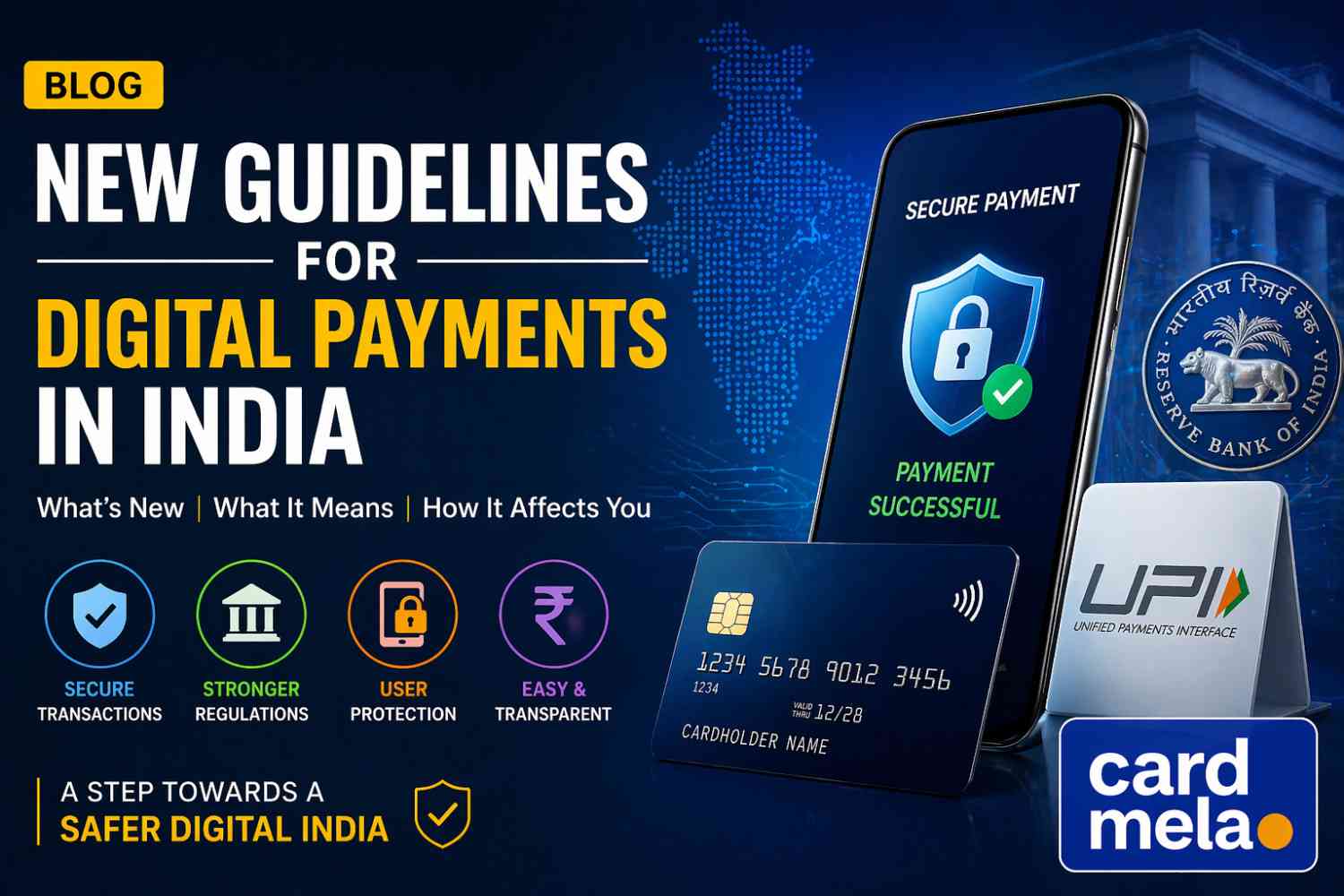
New Guidelines for Digital Payments in India
Table of Contents
New Guidelines for Digital Payments in India (2026): What Every User Must Know
Introduction
India’s digital payment ecosystem has witnessed explosive growth over the past few years, driven by the widespread adoption of UPI, mobile wallets, and credit card usage.
In 2026, digital payments in India are no longer just a convenience—they have become an essential part of everyday life. From paying utility bills and ordering food to booking travel and managing subscriptions, users are relying heavily on secure and fast payment systems. With this rapid growth, regulatory bodies like the Reserve Bank of India and the National Payments Corporation of India have introduced stronger and smarter guidelines to ensure that every transaction is not only quick but also highly secure. These changes are designed to give users more control, better transparency, and a safer digital environment.
One of the most important upgrades in the new guidelines is the implementation of tokenization, which replaces your actual card details with a secure digital token. This means that even if a platform is compromised, your sensitive information remains protected. When users make payments on platforms like Amazon or Flipkart, the system ensures that your card details are never directly exposed. Along with this, multi-layer authentication adds another level of security by verifying transactions through OTPs, device recognition, or biometric checks.
Explanation
The new digital payment guidelines in India focus on three major pillars: security, transparency, and user control. One of the most significant updates is the strengthening of authentication systems. Multi-factor authentication (MFA) has become more robust, ensuring that every transaction is verified through multiple layers such as OTPs, biometric authentication, or device-based verification.
Another key change is the introduction of stricter tokenization rules. Instead of storing actual card details on merchant platforms, payment systems now use encrypted tokens to process transactions. This reduces the risk of data breaches and protects user information during online payments on platforms like Amazon and Flipkart.
The guidelines also emphasize real-time transaction alerts and improved grievance redressal mechanisms. Users can now report unauthorized transactions more easily and expect faster resolution times.
Additionally, UPI systems have been upgraded with higher limits, better fraud detection, and support for credit cards, making digital payments more versatile than ever.
Benefits of New Digital Payment Guidelines
The updated guidelines bring significant benefits to users, starting with enhanced security. With stronger authentication and tokenization, the risk of fraud is significantly reduced, allowing users to transact with greater confidence.
Another major advantage is increased transparency. Users now have better visibility into their transactions, charges, and dispute resolution processes. This helps in building trust in digital payment systems.
The guidelines also improve convenience by streamlining payment processes. Faster transaction approvals, seamless integrations, and improved user interfaces make digital payments more efficient.
From a long-term perspective, these changes contribute to financial inclusion by making digital payments accessible and safe for a larger population, including first-time users.
Uses of Digital Payment Guidelines
These guidelines impact various real-life financial activities and enhance the way users interact with digital payments.
- Secure online shopping on Amazon
- UPI payments via apps supported by National Payments Corporation of India
- Credit card transactions with tokenization
- Bill payments and subscriptions with auto-debit controls
- International transactions with improved security
These use cases ensure that users can enjoy digital payments without compromising safety.
Best NEW Credit Cards for Digital Payments
HDFC Bank Pixel Credit Card
- Designed for app-based usage + secure payments
👉 Apply Now on CardMela
Axis Bank MY Zone Credit Card
- Secure digital transactions + offers
👉 Apply Now on CardMela
SBI SimplySAVE Credit Card
- Safe daily transactions + cashback
👉 Apply Now on CardMela
YES Bank Prosperity Edge Credit Card
- Security + rewards balance
👉 Apply Now on CardMela
Axis Bank ACE Credit Card
- Best for bill payments
- Works with UPI
HDFC Bank Millennia Credit Card
- 5% cashback on top websites
- Great for beginners
Flipkart Axis Bank Credit Card
- 5% cashback on Flipkart
- Extra offers on Myntra & Swiggy
HDFC Bank Regalia Gold Credit Card
- Airport lounge access
- Travel + reward benefits
Table: Key Digital Payment Guidelines
| Feature | Old System | New Guidelines (2026) |
|---|---|---|
| Card Storage | Saved on websites | Tokenized (secure code) |
| Authentication | OTP only | Multi-factor (OTP + device + behavior) |
| Fraud Detection | After transaction | Real-time + preventive |
| User Control | Limited | Full control (limits, mandates) |
| Alerts | Basic SMS | Instant real-time notifications |
Table: Digital Payment Methods Comparison
| Payment Method | Speed | Security Level | Best Use Case |
|---|---|---|---|
| UPI | Instant | High | Daily small payments |
| Credit Cards | Fast | Very High | Online + large transactions |
| Debit Cards | Moderate | High | ATM + basic payments |
| Wallets | Fast | Medium | Small quick payments |
Table: Safe vs Risky User Behavior
| Activity | Safe Practice | Risky Practice |
|---|---|---|
| Sharing OTP | Never share | Share on calls/messages |
| Clicking Links | Verify URL | Click unknown links |
| Wi-Fi Usage | Private network | Public Wi-Fi |
| Card Storage | Trusted apps only | Random websites |
Tips
To make the most of the new digital payment guidelines in India, users need to combine smart habits with the security features already built into the system. One of the most effective practices is to always stay alert while making transactions. Before entering card details or approving any payment, users should carefully verify the platform, URL, or request to ensure it is genuine. Even a small mistake, like clicking on a fake link, can lead to major financial loss.
Another important tip is to enable all available security features provided by banks and payment platforms. Features such as real-time transaction alerts, biometric authentication, and spending limits act as an additional layer of protection. Users should also regularly review their account statements and transaction history to quickly identify any unusual activity. This habit alone can prevent small issues from turning into serious problems.
It is also advisable to manage auto-debit mandates and subscriptions carefully. Many users forget about recurring payments, which can lead to unnecessary deductions. With the latest guidelines, users now have better control, so it is important to review and update these settings periodically. Additionally, avoiding public Wi-Fi for financial transactions and keeping apps updated ensures that your device remains secure against potential threats.
A practical strategy followed by smart users is to separate their spending. Using one credit card for online payments and another for offline transactions reduces risk and makes tracking easier. Setting lower limits for online transactions and disabling international usage when not required further strengthens security. Ultimately, digital payment safety is not about avoiding technology—it is about using it wisely.
Internal Linking
- How to Protect Your Bank Account from Fraud
- Best Cashback Credit Cards in India
- How to Maximize Credit Card Rewards
- How to Build a Strong Credit Score
External Linking
Conclusion
The new digital payment guidelines in India represent a significant step towards building a safer and more reliable financial ecosystem. By introducing advanced security measures such as tokenization, multi-layer authentication, and real-time monitoring, regulators like the Reserve Bank of India and systems managed by the National Payments Corporation of India have made digital transactions more secure than ever before.
However, while these systems provide strong protection, the responsibility of safe usage ultimately lies with the user. Technology can prevent many risks, but awareness and discipline are what truly ensure complete security. Users who stay informed, follow best practices, and actively monitor their financial activity can enjoy the full benefits of digital payments without fear.
In today’s fast-moving digital world, payments are no longer just about transferring money—they are about managing it smartly. By understanding the new rules and adopting the right habits, users can transform everyday transactions into a safe, efficient, and rewarding experience.
FAQs
Are digital payments safe in India in 2026?
Yes, digital payments are much safer in 2026 due to updated regulations by the Reserve Bank of India and systems managed by the National Payments Corporation of India. Features like tokenization, multi-factor authentication, and real-time alerts significantly reduce fraud risk.
What is tokenization in digital payments?
Tokenization is a security feature that replaces your actual credit or debit card details with a unique encrypted code (token). This ensures your sensitive information is not stored on websites, making transactions safer.
Can my saved card details be hacked?
With tokenization, the risk is extremely low. Even if a platform is compromised, the stored tokens cannot be used without proper authentication.
What is the safest way to make digital payments?
Using UPI and credit cards with enabled transaction alerts, spending limits, and authentication layers is considered the safest approach.
Are UPI payments secure?
Yes, UPI payments are secure and regulated by the National Payments Corporation of India. They include PIN-based authentication and real-time monitoring.
Can I control auto-debit subscriptions now?
Yes, new guidelines allow users to approve, modify, or cancel recurring payments easily, giving better control over subscriptions.
What should I do if I notice a suspicious transaction?
Immediately block your card or account and report it to your bank. Quick action increases the chances of recovering your money.
Author Bio
A platform dedicated to helping users compare credit cards and make smarter financial decisions. He specializes in banking trends, AI in finance, and cashback strategies, providing practical insights to maximize savings and optimize spending in India.
Whether you’re looking for cashback, travel rewards, fuel savings, or lifetime free cards — CardMela helps you compare, analyze, and choose the credit card that fits your lifestyle perfectly. We partner with leading partners to bring you exclusive offers and detailed insights, so you can make smart financial decisions with confidence.
© 2025 CardMela.com. All rights reserved.
