
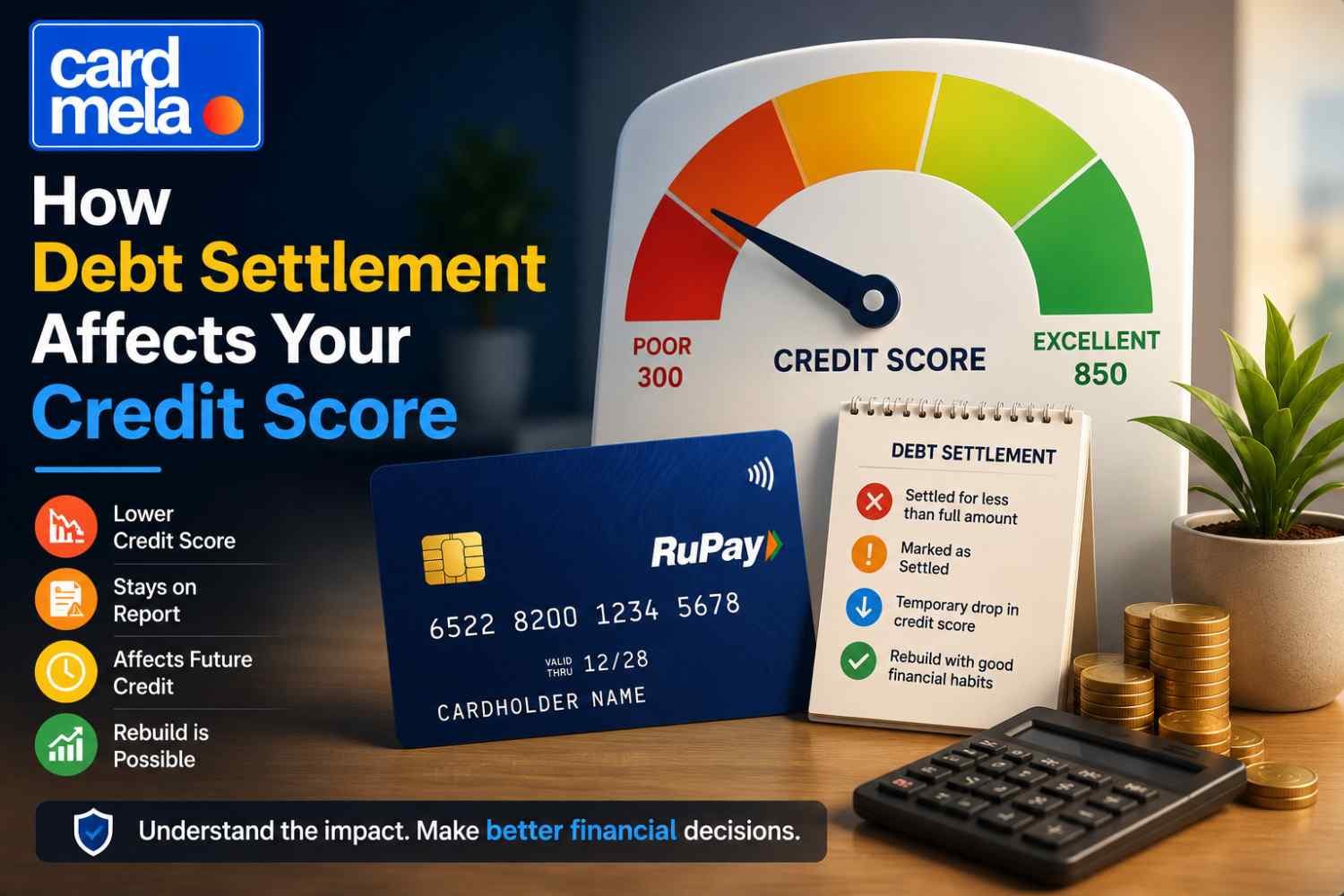
How Debt Settlement Affects Your Credit Score
Table of Contents
How Debt Settlement Affects Your Credit Score (India 2026 Guide)
Introduction
In 2026, rising living costs, easy digital loans, and aggressive credit card usage have pushed many Indians into debt problems. When borrowers are unable to repay loans or credit card dues fully, they often consider debt settlement as a quick solution. While settlement may provide temporary relief from financial pressure, it can significantly impact your credit score and future borrowing ability.
Many people misunderstand debt settlement and assume it works like normal loan closure. However, there is a major difference between a “settled” account and a “closed” account. Financial institutions regulated by the Reserve Bank of India and credit bureaus like TransUnion CIBIL treat debt settlements as a sign of financial stress, which can negatively affect your credit profile for years.
Understanding how debt settlement works, its impact on your credit score, and ways to recover financially is essential before making any settlement decision.
Explanation
Debt settlement happens when a borrower negotiates with a lender to pay only a portion of the outstanding loan amount instead of the full amount due. This usually occurs when the borrower is facing severe financial difficulties and cannot repay the debt completely.
For example, if someone owes ₹2 lakh on a credit card and settles the account for ₹1.2 lakh, the remaining unpaid amount is written off by the lender. While this reduces immediate financial pressure, the lender reports the account as “settled” instead of “closed” to credit bureaus.
This status signals that the borrower did not repay the full amount as agreed, which lowers trustworthiness in the eyes of future lenders. As a result, debt settlement can reduce credit scores and make future loan approvals more difficult.
Benefits
Despite its negative impact on credit scores, debt settlement does offer certain short-term benefits for borrowers under extreme financial stress. One of the biggest advantages is immediate relief from overwhelming debt pressure. Borrowers who are unable to repay full dues may avoid legal notices, recovery harassment, or prolonged financial stress through settlement.
Another benefit is reduced repayment burden. Instead of paying the full outstanding amount with heavy interest and penalties, borrowers can close the debt with a negotiated lower amount. This can help individuals stabilize their finances and start rebuilding their financial life.
Debt settlement may also prevent accounts from becoming completely unmanageable. In some cases, settling debt early can be less damaging than allowing the account to remain unpaid for years. However, it should always be treated as a last-resort option rather than a financial strategy.
Table: Debt Settlement vs Loan Closure
| Feature | Debt Settlement | Loan Closure |
|---|---|---|
| Full repayment | No | Yes |
| Credit score impact | Negative | Positive |
| Future loan approval | Difficult | Easier |
| Credit report status | Settled | Closed |
Table: Common Reasons for Debt Settlement
| Reason | Impact |
|---|---|
| Job loss | Financial pressure |
| Medical emergency | Payment difficulty |
| Business loss | Debt accumulation |
| Overspending | Credit stress |
Best Credit Cards to Rebuild Credit After Debt Settlement
IDFC FIRST Millennia Credit Card
This card is suitable for users rebuilding their credit profile after financial difficulties. It offers manageable spending limits, reward points, and strong repayment tracking features. Responsible usage and timely payments can gradually improve creditworthiness after a settlement record.
Axis Bank Privilege Credit Card
Axis Privilege helps users rebuild financial discipline through reward-based spending and controlled credit usage. By maintaining low utilization and paying bills on time, borrowers can slowly restore their credit score and lender confidence.
SBI SimplySAVE Credit Card
This card is designed for everyday spending and helps users establish a positive repayment history. Consistent usage without missed payments can improve credit behavior after debt settlement.
RBL ShopRite Credit Card
RBL ShopRite provides cashback benefits while encouraging disciplined financial management. It is useful for users who want controlled spending with additional savings benefits during credit rebuilding.
AU Bank LIT Credit Card
AU LIT is a modern digital-first card with customizable features and spending controls. It helps users maintain better financial discipline while gradually improving their credit profile through responsible usage.
Table: Credit Score Impact After Settlement
| Credit Behavior | Credit Score Effect |
|---|---|
| Settlement record | Major drop |
| Timely repayments later | Gradual improvement |
| Multiple settlements | Severe damage |
| Responsible card use | Positive recovery |
Table: How Long Settlement Affects Credit
| Situation | Approximate Impact Duration |
|---|---|
| Single settlement | 3–5 years |
| Multiple defaults | 5–7 years |
| Good repayment afterward | Faster recovery |
Uses
Understanding debt settlement is useful for borrowers facing severe financial difficulties who need immediate relief from debt obligations. It helps individuals negotiate with lenders and reduce repayment pressure when full repayment is not possible.
Debt settlement knowledge is also useful for financial planning and risk management. By understanding the long-term consequences, borrowers can make informed decisions instead of reacting emotionally during financial stress.
Additionally, learning about debt settlement helps users avoid common financial mistakes such as overusing credit cards, taking unnecessary loans, or ignoring repayment responsibilities. It also encourages better budgeting and emergency fund planning for the future.
Tips
Debt settlement should always be considered a last resort. Before choosing settlement, borrowers should first explore alternatives such as EMI restructuring, balance transfer options, or temporary payment relief offered by lenders.
One of the most important recovery tips after settlement is rebuilding credit discipline. Paying all future EMIs and credit card bills on time is essential for improving credit scores gradually. Maintaining low credit utilization and avoiding unnecessary loans also helps rebuild lender trust.
Borrowers should regularly monitor their credit reports from bureaus like TransUnion CIBIL to ensure records are updated correctly. Financial education and disciplined spending habits play a major role in long-term recovery after settlement.
Internal Linking
- How to Build a Strong Credit Score
- Best Credit Cards for Beginners
- Financial Independence Using Credit Cards
- Best Cashback Credit Cards in India
External Linking
Table: Smart Recovery Plan After Debt Settlement
| Step | Benefit |
|---|---|
| Pay future bills on time | Credit recovery |
| Use secured cards carefully | Rebuild trust |
| Avoid multiple loans | Lower risk |
| Build emergency fund | Financial stability |
Table: Rich vs Poor Debt Habits
| Smart Financial Habit | Risky Financial Habit |
|---|---|
| Budgeting | Emotional spending |
| Emergency fund | No savings |
| Controlled credit use | Maxed-out cards |
| Investing | Excessive debt |
Conclusion
Debt settlement can provide temporary relief during serious financial difficulties, but it comes with long-term consequences for your credit profile. While settling debt may reduce immediate stress, it can lower your credit score and affect future loan approvals for several years.
The best approach is always prevention through disciplined financial management, controlled credit usage, and emergency savings. However, if settlement becomes unavoidable, borrowers should focus on rebuilding financial discipline immediately afterward.
In the modern financial world, your credit score is one of your most valuable assets. Protecting it through responsible borrowing and repayment habits is essential for long-term financial freedom.
FAQs (Frequently Asked Questions)
Does debt settlement permanently damage your credit score?
Debt settlement does not permanently destroy your credit score, but it can negatively impact it for several years. Lenders view settled accounts as a sign that the borrower could not repay the full amount, which reduces creditworthiness. However, responsible financial behavior after settlement can gradually improve the score over time.
What is the difference between “settled” and “closed” in a credit report?
A “closed” account means the borrower repaid the entire outstanding amount successfully, while a “settled” account means the lender accepted a lower payment than originally due. Closed accounts positively impact credit history, whereas settled accounts negatively affect future borrowing ability.
Can I get a loan after debt settlement?
Yes, it is still possible to get loans after settlement, but approval becomes more difficult. Lenders may offer smaller amounts, higher interest rates, or stricter conditions until your credit profile improves.
How long does a settlement record stay in a credit report?
Settlement records can remain visible in credit reports for several years, usually around 7 years depending on the bureau and repayment behavior afterward.
Is debt settlement better than not paying at all?
In many cases, settlement is less harmful than completely defaulting and ignoring payments. However, it should only be used when no better repayment option is available.
How can I improve my credit score after settlement?
You can improve your score by paying future bills on time, using credit cards responsibly, maintaining low utilization, and avoiding unnecessary borrowing. Consistency and patience are key to recovery.
Author Bio
CardMela, helping Indian users make smarter financial decisions through credit cards, digital banking, investing, and personal finance strategies. His expertise lies in simplifying complex financial topics into practical advice for everyday consumers.
Whether you’re looking for cashback, travel rewards, fuel savings, or lifetime free cards — CardMela helps you compare, analyze, and choose the credit card that fits your lifestyle perfectly. We partner with leading partners to bring you exclusive offers and detailed insights, so you can make smart financial decisions with confidence.
© 2025 CardMela.com. All rights reserved.
