
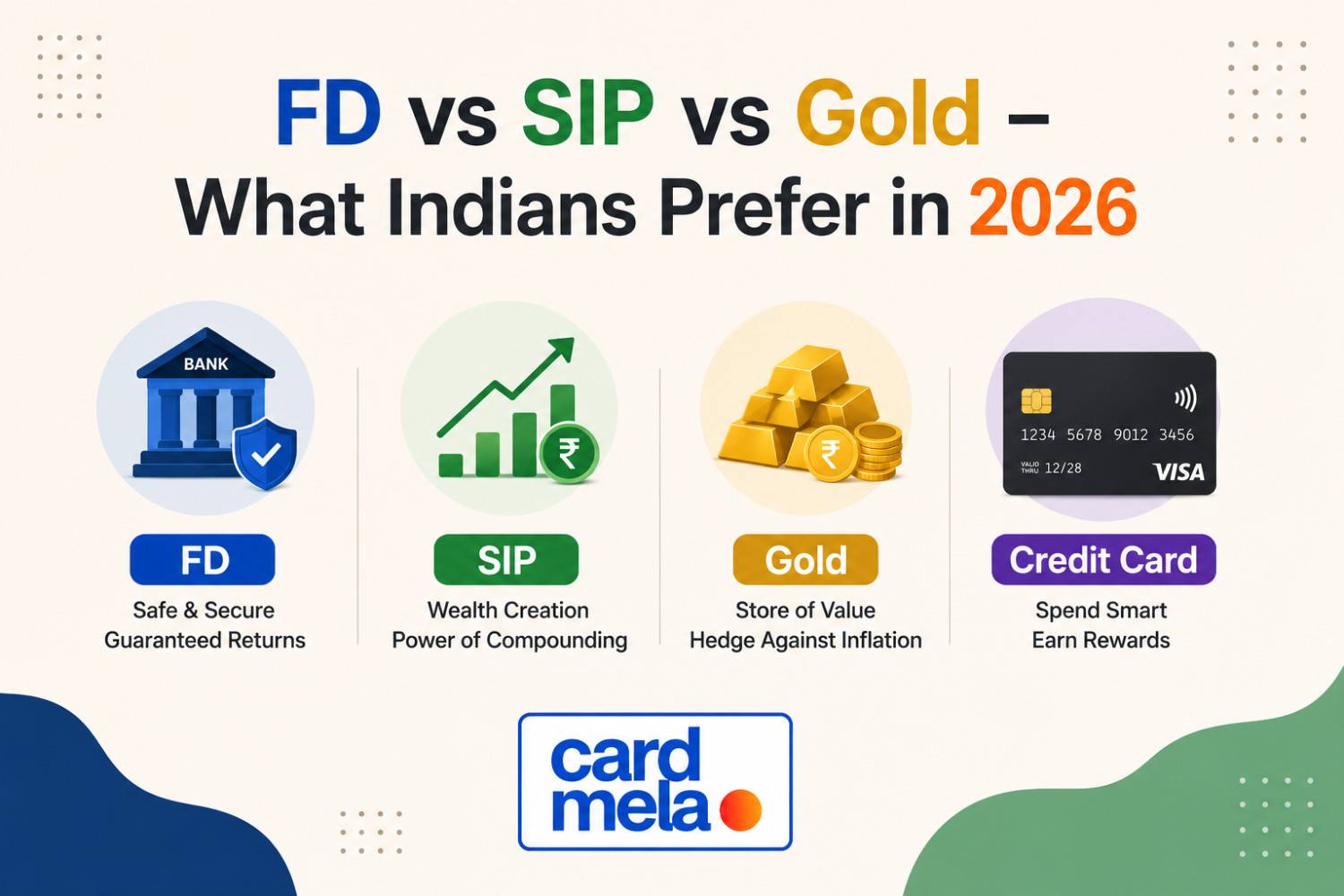
FD vs SIP vs Gold – What Indians Prefer in 2026
Table of Contents
FD vs SIP vs Gold – What Indians Prefer in 2026
Introduction
For decades, Indian families have focused heavily on saving money and building financial security through traditional and modern investment methods. Among the most popular investment options in India, Fixed Deposits (FDs), Systematic Investment Plans (SIPs), and Gold continue to dominate household financial planning. However, in 2026, investor preferences are changing rapidly due to inflation, digital banking growth, financial awareness, and changing economic conditions.
Earlier generations strongly trusted bank Fixed Deposits and physical gold because of safety and emotional value. But younger investors are increasingly shifting toward SIPs and digital investment products because they offer higher long-term growth potential and better inflation-adjusted returns.
Today’s financially aware Indians are no longer investing blindly. Instead, they compare risk, returns, liquidity, taxation, and long-term wealth-building potential before choosing investment products.
Organizations like the Reserve Bank of India and Securities and Exchange Board of India continue strengthening India’s financial ecosystem, encouraging both traditional and modern investment participation.
Understanding the difference between FD, SIP, and Gold investments is extremely important for anyone planning to build wealth safely and intelligently in 2026.
Understanding FD, SIP, and Gold Investments
Fixed Deposits are bank-based investment products where money is deposited for a fixed period at a predetermined interest rate. They are considered low-risk and highly stable.
Systematic Investment Plans (SIPs) allow investors to invest small amounts regularly into mutual funds. SIPs are market-linked investments that offer long-term wealth creation opportunities.
Gold investments include physical gold, digital gold, gold ETFs, sovereign gold bonds, and jewelry investments. Indians traditionally consider gold both an investment and a symbol of cultural security.
Each option serves different financial purposes, risk levels, and investment goals.
Benefits of Fixed Deposits
Fixed Deposits are highly popular among conservative investors because they provide stable and predictable returns. Retired individuals, salaried employees, and risk-averse families often prefer FDs for capital safety and guaranteed income.
Another important benefit is low risk. Since FDs are offered by regulated banks and financial institutions, investors feel psychologically secure compared to market-linked products.
FDs are also useful for short-term financial planning because returns are predictable and unaffected by market volatility.
Additionally, senior citizens often receive higher FD interest rates, making them attractive for retirement-focused financial planning.
Benefits of SIP Investments
SIPs have become one of the fastest-growing investment trends in India because they combine affordability, discipline, and long-term wealth creation. Investors can start SIPs with very small monthly amounts, making them accessible even to beginners and middle-class families.
One major advantage of SIPs is compounding. Long-term SIP investments can generate significant wealth growth through disciplined investing and market appreciation.
SIPs also help reduce emotional investing because money is invested regularly regardless of market fluctuations. This creates financial discipline and long-term consistency.
Young professionals increasingly prefer SIPs because they align well with long-term goals such as retirement, home buying, education planning, and financial independence.
Benefits of Gold Investments
Gold remains deeply connected with Indian culture and financial psychology. Many families view gold as both an emergency asset and a long-term wealth preservation tool.
One major advantage of gold is inflation protection. During economic uncertainty, gold prices often rise, helping investors preserve purchasing power.
Gold is also highly liquid because it can be sold quickly during emergencies. Digital gold and sovereign gold bonds have further modernized gold investing in India.
Additionally, gold acts as a diversification asset, reducing overall portfolio risk when combined with other investments.
Table: FD vs SIP vs Gold Comparison
| Feature | FD | SIP | Gold |
|---|---|---|---|
| Risk Level | Low | Moderate to High | Moderate |
| Returns Potential | Stable | High Long-Term | Moderate |
| Inflation Protection | Weak | Strong | Strong |
| Liquidity | Moderate | High | High |
| Wealth Creation | Limited | Excellent | Moderate |
Table: Which Investment Fits Your Personality?
| Investor Type | Best Option |
|---|---|
| Conservative saver | FD |
| Young long-term investor | SIP |
| Inflation-conscious investor | Gold |
| Retirement-focused investor | FD + SIP |
| Diversified investor | SIP + Gold |
Why Younger Indians Prefer SIPs in 2026
Younger investors are increasingly choosing SIPs because traditional savings methods often fail to beat inflation. Rising financial literacy and digital investment platforms have made mutual fund investing much easier than before.
Apps and fintech platforms now allow users to start investing within minutes using mobile phones. This accessibility has dramatically increased SIP participation among Gen Z and millennials.
Experts also believe social media financial education has played a major role in changing Indian investment behavior. Young investors now understand concepts like compounding, inflation, diversification, and long-term wealth creation better than previous generations.
Best Credit Cards for Investors & Smart Financial Users
HDFC Bank Regalia Gold Credit Card
HDFC Regalia Gold is suitable for financially disciplined users who want premium rewards, travel benefits, and lifestyle privileges while managing digital investments and large transactions efficiently.
Axis Bank Magnus Credit Card
Axis Magnus is popular among high-income professionals and investors because of its strong reward ecosystem and premium spending advantages.
SBI Cashback Credit Card
This card is ideal for users who manage regular digital expenses and investment-related subscriptions while earning cashback rewards on online spending.
ICICI Bank Sapphiro Credit Card
ICICI Sapphiro provides premium banking experiences, digital payment support, and reward optimization for financially active users.
YES Bank Marquee Credit Card
YES Bank Marquee is useful for users seeking luxury privileges, strong rewards, and premium financial lifestyle benefits.
Table: Best Financial Habits of Smart Investors
| Smart Habit | Benefit |
|---|---|
| Diversifying investments | Lower risk |
| Investing regularly | Better compounding |
| Tracking inflation | Smarter planning |
| Avoiding emotional investing | Stable growth |
Table: Common Investment Mistakes Indians Make
| Mistake | Financial Impact |
|---|---|
| Keeping all money in savings account | Inflation loss |
| Buying emotional gold jewelry | Lower investment value |
| Stopping SIPs during market falls | Missed long-term growth |
| Chasing unrealistic returns | Financial risk |
Uses
FDs are useful for emergency funds, retirement planning, and conservative financial goals where safety matters more than aggressive returns.
SIPs are highly effective for long-term goals such as wealth creation, retirement planning, children’s education, and financial independence.
Gold investments are useful for portfolio diversification, inflation protection, and cultural savings preferences.
Financially smart investors often combine all three investment methods strategically to balance stability, growth, and protection.
Tips
Investors should avoid putting all their money into a single asset class. Diversification is one of the most important principles of long-term financial stability.
Young investors with long investment horizons should focus more heavily on SIP-based investing because of compounding benefits and inflation-adjusted growth potential.
Conservative investors should maintain emergency reserves in Fixed Deposits while gradually learning about mutual fund investing.
Gold should be treated as a portfolio stabilizer rather than the only wealth-building strategy. Digital gold and sovereign gold bonds are often safer and more efficient than physical gold storage.
Financial discipline, consistency, and patience matter far more than trying to predict short-term market movements.
Table: Long-Term Wealth Building Strategy
| Goal | Suggested Investment Mix |
|---|---|
| Emergency savings | FD |
| Long-term growth | SIP |
| Inflation protection | Gold |
| Retirement planning | FD + SIP |
| Balanced portfolio | SIP + Gold + FD |
Table: Investment Returns vs Inflation
| Investment | Inflation Protection |
|---|---|
| Savings account | Weak |
| Fixed Deposit | Moderate |
| Gold | Good |
| SIP | Strong Long-Term |
Digital Investing Trends in India
India’s investment ecosystem is becoming increasingly digital. Mobile investment apps, AI-based portfolio recommendations, and UPI-linked financial systems are simplifying investing for ordinary users.
Platforms integrated with Google Pay and PhonePe are helping millions of Indians access investment products directly from smartphones.
Experts believe India’s next decade will witness explosive growth in SIP participation due to increasing financial literacy, rising incomes, and expanding fintech infrastructure.
Internal Linking
- Best Investment Options for Beginners in 2026
- Why SIP Investments Are Growing Fast
- Best Cashback Credit Cards in India
- Credit Cards That Work Best with Google Pay & PhonePe
- Mistakes That Kill Your Credit Score
External Linking
Conclusion
FDs, SIPs, and Gold each play an important role in Indian financial planning. There is no single “perfect” investment option because every investor has different goals, risk tolerance, and financial priorities.
Fixed Deposits provide stability and safety. SIPs provide long-term wealth creation and inflation-beating growth. Gold provides emotional security, diversification, and protection during uncertain times.
The smartest investors of 2026 are not blindly choosing one option over another. Instead, they are building balanced portfolios that combine safety, growth, and financial flexibility intelligently.
Financial success is rarely about quick profits — it is usually the result of disciplined investing, patience, and consistent decision-making over time.
FAQs (Frequently Asked Questions )
Which is better in 2026 — FD, SIP, or Gold?
There is no universal answer. SIPs are generally better for long-term wealth creation, FDs are better for safety and stable income, while Gold works well for diversification and inflation protection.
Can SIPs give better returns than Fixed Deposits?
Historically, equity-based SIPs have often generated higher long-term returns than traditional Fixed Deposits, although they also carry market risks.
Why do Indian families still trust gold heavily?
Gold has deep cultural, emotional, and financial importance in India. Many families consider it a symbol of security and emergency wealth preservation.
Is it risky to invest only in SIPs?
Market-linked investments carry risk, but long-term SIP investing combined with diversification generally reduces volatility over time.
Are Fixed Deposits still useful in modern investing?
Yes. FDs remain useful for emergency savings, retirement income, and conservative investors seeking stability and predictable returns.
Should young investors avoid gold completely?
No. Gold still provides diversification and inflation protection. However, younger investors often allocate a larger portion toward growth-focused assets like SIPs.
What is the biggest investment mistake people make?
Many people either avoid investing completely or chase unrealistic returns without understanding risk properly. Lack of financial discipline is often the biggest long-term problem.
Author Bio
CardMela, a growing platform dedicated to helping Indian consumers make smarter financial decisions. Through CardMela, he focuses on credit cards, digital banking, investing awareness, cashback strategies, and modern financial tr
Whether you’re looking for cashback, travel rewards, fuel savings, or lifetime free cards — CardMela helps you compare, analyze, and choose the credit card that fits your lifestyle perfectly. We partner with leading partners to bring you exclusive offers and detailed insights, so you can make smart financial decisions with confidence.
© 2025 CardMela.com. All rights reserved.
