
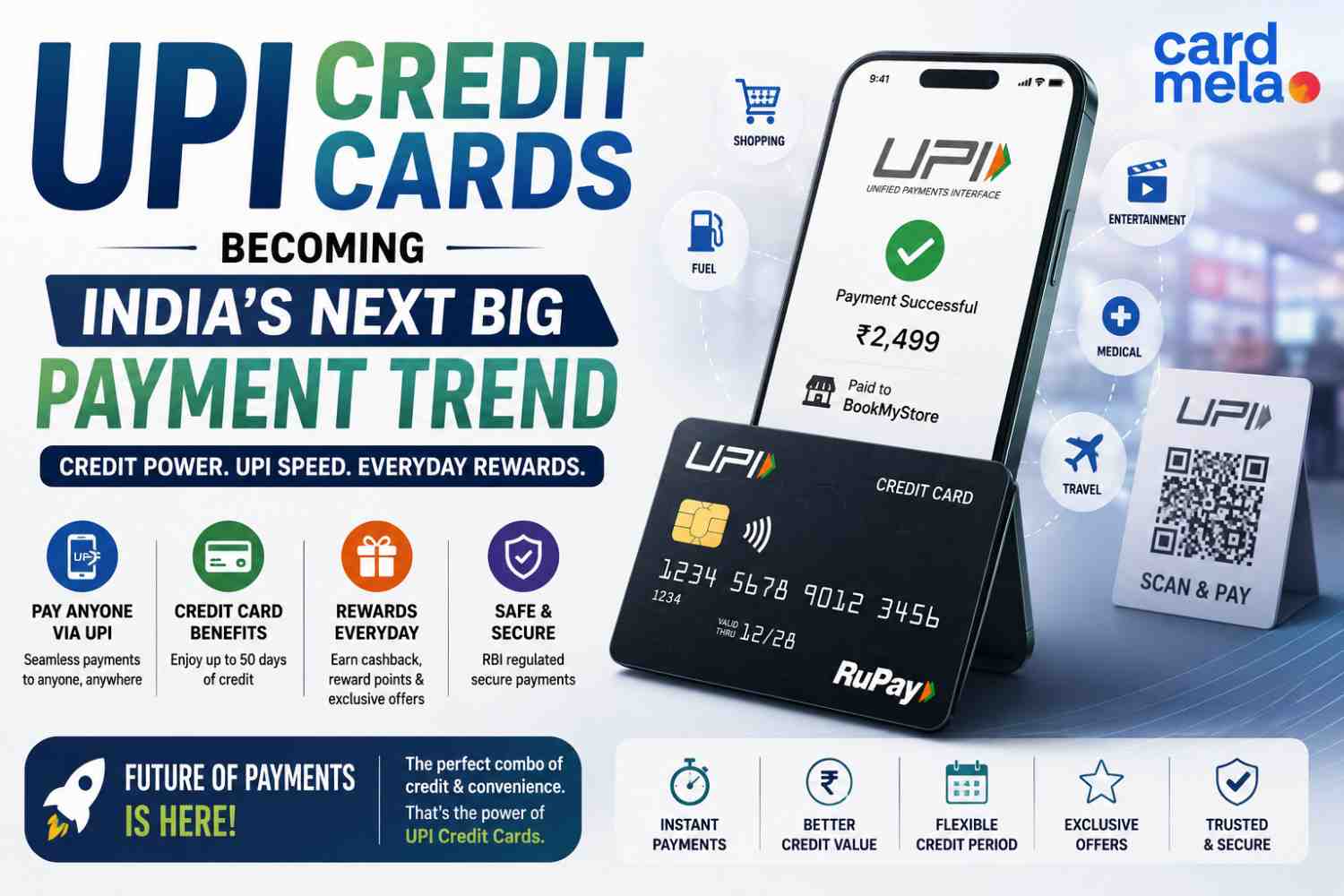
Amazing Growth of UPI Credit Cards Across India in 2026
Table of Contents
Amazing Growth of UPI Credit Cards Across India in 2026
Introduction
India’s digital payment revolution is entering a completely new phase, and UPI-based credit cards are quickly becoming the center of attention. Over the last few years, the country has witnessed explosive growth in UPI transactions, QR-code payments, mobile wallets, and contactless banking systems. However, the latest transformation is even bigger — consumers can now connect credit cards directly to UPI apps and make payments at small shops, grocery stores, fuel stations, restaurants, and online platforms without needing physical cards.
This shift is changing the way Indians spend money.
Earlier, credit cards were mostly used for:
- Online shopping
- Big purchases
- Travel bookings
- Luxury spending
- EMI transactions
But now, thanks to UPI integration, consumers are using credit cards even for:
- Tea stalls
- Grocery shops
- Petrol pumps
- Vegetable markets
- Pharmacy payments
- Street vendors
- Local restaurants
This new ecosystem is rapidly transforming India into a fully digital credit economy.
Organizations like National Payments Corporation of India and major financial institutions such as HDFC Bank, ICICI Bank, Axis Bank, State Bank of India, and fintech platforms like PhonePe and Google Pay are aggressively expanding UPI credit card ecosystems.
Consumers are no longer asking:
“Cash ya card?”
Now they ask:
“UPI on credit card chalega?”
How UPI Credit Cards Work
UPI credit cards combine the convenience of UPI payments with the spending flexibility of traditional credit cards.
Instead of scanning QR codes directly from savings accounts, consumers can now link eligible RuPay credit cards to UPI apps and pay merchants directly through credit lines.
This system provides several advantages:
- Credit-based spending flexibility
- Reward points on UPI transactions
- Cashback opportunities
- Better expense tracking
- Reduced dependency on cash
- Faster digital transactions
The biggest transformation is that small merchants who earlier accepted only UPI bank payments can now indirectly accept credit card transactions through QR codes.
This creates a completely new digital spending ecosystem.
Table: Traditional Credit Cards vs UPI Credit Cards
| Traditional Credit Cards | UPI Credit Cards |
|---|---|
| Mostly used online | Used almost everywhere |
| Physical card required | QR-code payments possible |
| Limited merchant usage | Small shops supported |
| Card swipe machines needed | UPI scanners enough |
| Less penetration in local markets | Strong local market adoption |
Why UPI Credit Cards Are Growing So Fast
The growth of UPI credit cards is happening because India already has one of the world’s largest digital payment infrastructures.
Millions of merchants already use QR-code systems.
Consumers are highly comfortable with:
- Scanning QR codes
- Mobile payments
- Instant transactions
- App-based banking
Adding credit cards into this ecosystem creates a perfect combination of:
- Convenience
- Rewards
- Flexibility
- Cashback opportunities
Banks also aggressively promote these products because UPI-linked credit spending increases transaction volume and customer engagement.
Consumers meanwhile enjoy:
- Delayed payment flexibility
- Cashback rewards
- EMI opportunities
- Better digital convenience
The result is one of the fastest-growing financial trends in India.
Table: Signs India Is Becoming a UPI Credit Economy
| Situation | Reality |
|---|---|
| Paying chaiwala via credit card UPI | New India |
| Grocery cashback through QR scan | Everyday reality |
| Fuel payments through UPI credit cards | Rapid adoption |
| Street vendors accepting credit | Financial revolution |
Best UPI Credit Cards in India
Kiwi YES Bank RuPay Credit Card
One of the fastest-growing UPI-focused credit cards offering strong cashback systems and seamless RuPay UPI integration.
HDFC Bank UPI RuPay Credit Card
Perfect for users heavily dependent on QR-code transactions and digital spending ecosystems.
ICICI Bank Coral RuPay Credit Card
Designed for everyday spending, grocery shopping, fuel payments, and local merchant transactions.
Axis Bank RuPay Credit Card
Excellent for users who prefer app-based banking and UPI-linked spending habits.
SBI SimplySAVE RuPay Credit Card
Useful for grocery purchases, local spending, and digital cashback opportunities.
PNB RuPay Select Credit Card
Strong option for consumers wanting QR-based payments with lifestyle and reward benefits.
Table: Best Cards Based on Usage Style
| Spending Style | Recommended Card |
|---|---|
| Heavy QR-code usage | Kiwi YES Bank |
| Grocery spending | SBI SimplySAVE |
| Lifestyle payments | PNB RuPay Select |
| Everyday UPI usage | ICICI Coral RuPay |
| Digital-first users | Axis RuPay |
Benefits of UPI Credit Cards
UPI credit cards provide several advantages compared to traditional payment systems.
Major benefits include:
- QR-code payments using credit lines
- Cashback on UPI transactions
- Better transaction convenience
- Improved expense tracking
- Reduced dependency on cash
- Increased acceptance at local shops
- Reward-point accumulation
- Faster payment experience
Consumers no longer need to carry physical wallets or debit cards because smartphones now handle almost every financial transaction.
Another important advantage is transaction visibility. UPI credit cards create detailed digital spending records that help users monitor budgets more efficiently.
Uses of UPI Credit Cards in Daily Life
UPI credit cards are rapidly becoming integrated into everyday Indian spending habits.
Consumers now use them for:
- Grocery shopping
- Petrol payments
- Restaurant bills
- Pharmacy purchases
- Tea stalls
- Vegetable markets
- Utility bill payments
- QR-code shopping
- Local merchant transactions
- Ecommerce spending
This expansion is one of the biggest reasons why UPI credit cards are expected to dominate India’s payment ecosystem in coming years.
The funniest reality is that even roadside vendors now sometimes ask:
“Credit card wali UPI karoge?”
Table: Funniest UPI Credit Card Moments
| Situation | Financial Reality |
|---|---|
| Paying ₹20 chai on credit | Digital India peak |
| Cashback on pani puri | Modern economy |
| QR-code payments everywhere | Cash disappearing |
| Tracking ₹5 rewards seriously | Cashback addiction |
Why Banks Love UPI Credit Cards
Banks are heavily promoting UPI credit cards because they combine two highly profitable ecosystems:
- UPI transaction growth
- Credit-based spending
This creates enormous opportunities for:
- Merchant commissions
- Higher transaction volume
- Reward-based engagement
- EMI conversions
- Premium upgrades
- Customer retention
Banks also gain valuable consumer spending data that helps AI systems create personalized offers and marketing campaigns.
The more consumers spend digitally, the stronger the banking ecosystem becomes.
Tips for Using UPI Credit Cards Smartly
Consumers can enjoy UPI credit cards safely if they maintain spending discipline.
Important tips include:
- Pay bills fully every month
- Avoid unnecessary QR-based impulsive spending
- Monitor transaction history regularly
- Use cashback only on planned expenses
- Avoid excessive EMI conversions
- Limit multiple active cards
- Maintain low credit utilization
UPI convenience can sometimes make spending feel “invisible,” which increases impulsive purchases.
The smartest consumers treat UPI credit cards as financial tools — not free money.
Table: Smart vs Dangerous UPI Credit Habits
| Smart Usage | Dangerous Usage |
|---|---|
| Planned spending | Impulsive QR scanning |
| Full monthly payments | Minimum due trap |
| Budget tracking | Ignoring transaction totals |
| Reward optimization | Cashback obsession |
Internal Linking
- Best UPI-Based Credit Cards in India
- Credit Cards That Work Best with Google Pay & PhonePe
- PNB Partners with Kiwi to Launch New UPI-Based Credit Card
- Best Cashback Credit Cards for Grocery Shopping
- Best Credit Cards for Petrol Cashback
External Linking
Conclusion
UPI credit cards are rapidly becoming one of the biggest financial innovations in India’s digital economy.
By combining QR-code convenience with credit flexibility, these systems are changing the way consumers interact with money. From small tea stalls to large supermarkets, UPI-linked credit payments are slowly becoming a normal part of everyday Indian life.
Banks and fintech companies are aggressively pushing this ecosystem because it increases digital spending, customer engagement, and transaction growth.
At the same time, consumers must remember that convenience can easily turn into overspending if financial discipline weakens.
The future of Indian payments is no longer just digital.
It is becoming fully credit-powered, QR-driven, app-based, and reward-focused.
And the “Cockroach Janta Party” is fully prepared to demand cashback on every single QR scan.
FAQs (Frequently Asked Questions)
What exactly is a UPI credit card?
A UPI credit card is a RuPay-based credit card that can be linked directly to UPI apps like Google Pay, PhonePe, and Paytm. Instead of paying merchants directly from bank accounts, consumers can use their credit limit while scanning QR codes through UPI apps. This combines the convenience of UPI payments with the flexibility and rewards of credit cards.
Why are UPI credit cards becoming so popular in India?
UPI credit cards are growing rapidly because India already has a massive QR-code payment ecosystem. Consumers are comfortable with UPI apps, and merchants everywhere already accept QR payments. Adding credit cards to this system allows users to earn cashback, reward points, and payment flexibility while continuing to use familiar UPI apps.
Can UPI credit cards be used at local shops and street vendors?
Yes, this is one of the biggest advantages of UPI-linked credit cards. Consumers can now make credit-based payments at grocery shops, tea stalls, vegetable markets, pharmacies, fuel stations, and many small merchants that accept UPI QR codes.
Are UPI credit cards safer than physical credit cards?
In many situations, yes. UPI apps provide app-based authentication, transaction visibility, and smartphone-level security systems. Consumers also avoid physically handing over cards at merchant counters, reducing certain fraud risks. However, users must still remain careful about phishing links, fake QR codes, and scam apps.
Do UPI credit card transactions give cashback and rewards?
Yes, many banks now provide cashback, reward points, and special offers on UPI-linked credit card transactions. The exact benefits depend on the specific card and spending category. Some cards focus heavily on groceries, fuel, dining, or digital spending rewards.
Why are banks aggressively promoting UPI credit cards?
Banks benefit because UPI-linked credit systems increase digital transaction volume, customer engagement, and spending activity. More transactions generate merchant commissions, EMI opportunities, and valuable spending data that banks use for personalized offers and financial marketing.
Can UPI credit cards increase unnecessary spending?
Yes. The convenience of instant QR-code payments can make spending feel effortless and psychologically lighter than cash transactions. Some users begin scanning QR codes impulsively without properly tracking total expenses, which can slowly increase debt pressure.
Which consumers benefit most from UPI credit cards?
UPI credit cards work best for consumers who frequently use digital payments for groceries, fuel, local shopping, food delivery, travel bookings, and everyday transactions. Smartphone-heavy users benefit the most from these systems.
Are UPI credit cards replacing traditional payment methods?
They are rapidly becoming a major alternative. Many younger consumers now prefer scanning QR codes over carrying cash, debit cards, or even physical credit cards. This trend is expected to grow significantly in coming years.
What is the funniest reality about UPI credit cards in India?
The funniest reality is that consumers can now buy ₹20 chai, ₹15 pani puri, or ₹30 cold drinks entirely on credit while proudly tracking ₹2 cashback rewards as if they are managing a billion-dollar investment portfolio.
Author Bio
CardMela, a fast-growing platform dedicated to helping Indian consumers make smarter financial decisions. With years of experience analyzing banking trends, fintech ecosystems, cashback systems, and digital payment technologies, Manish specializes in simplifying complex financial topics into practical and engaging content.
Whether you’re looking for cashback, travel rewards, fuel savings, or lifetime free cards — CardMela helps you compare, analyze, and choose the credit card that fits your lifestyle perfectly. We partner with leading partners to bring you exclusive offers and detailed insights, so you can make smart financial decisions with confidence.
© 2025 CardMela.com. All rights reserved.
